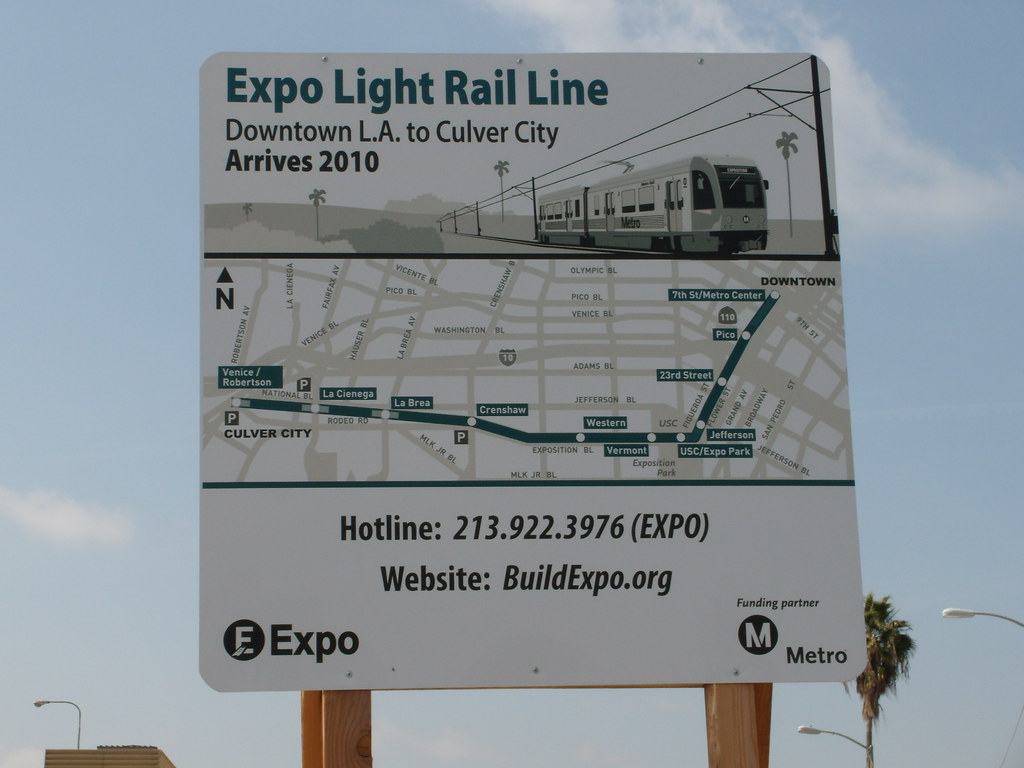
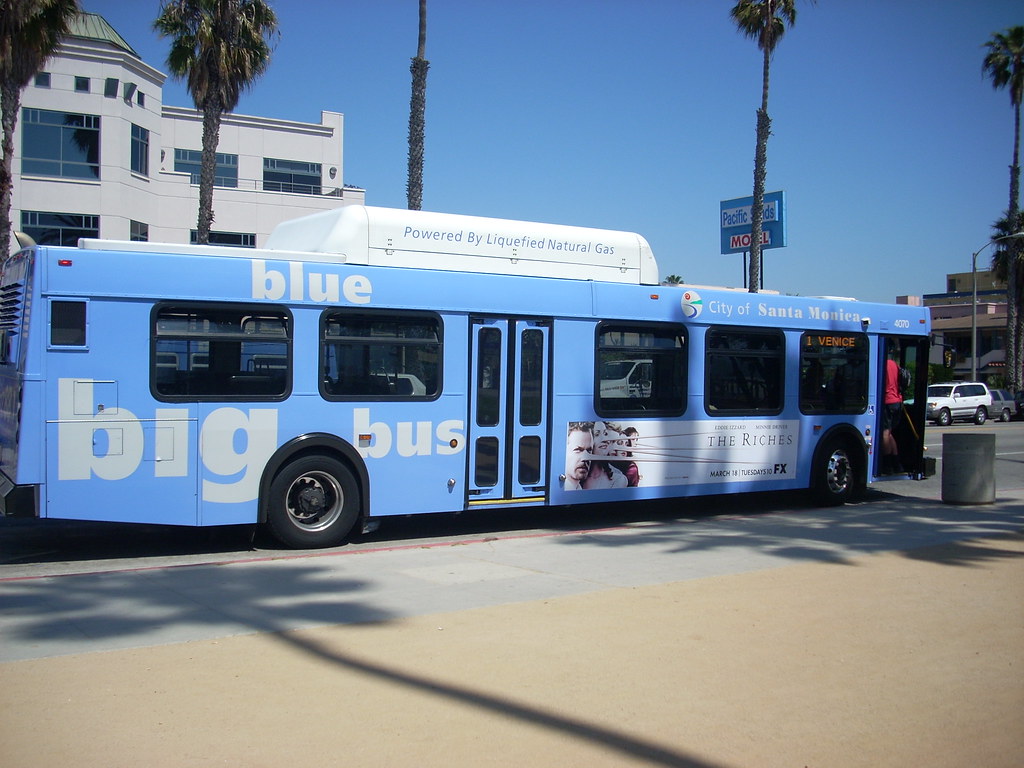
Pedestrian View Of Los Angeles

This blog focuses on rail lines in LA country that exist, are under construction or under consideration. The Californian high-speed rail project and southern CA to Vegas project will also be covered. Since most of the relevant developments in the news, rail websites and blogosphere take place on weekdays, this blog will be updated primarily Monday through Friday and occasionally on the weekends. Your comments, criticism and suggestions are encouraged. Miscellaneous stuff will also appear here.

More content as you stroll down on the right side

1. Blog Archive
2.
Blog List and Press Releases
3.
My Blog List
4.
Rail Lines: Existing, Under Construction and Under Consideration
5.
Share It
6.
Search This Blog
7.
Followers
8.
About Me
9.
Feedjit Live Traffic Feed
Showing posts with label Metro Exposition Line Both Phases. Show all posts

Sunday, May 15, 2011

EXPO, Bus Changes to Reshape Public Transportation in Santa Monica ( Santa Monica Mirror)

EXPO, Bus Changes to Reshape Public Transportation in Santa Monica

POSTED MAY. 12, 2011, 7:47:00 AM

ART COURTESY OF THE CITY OF SANTA MONICA
Concept art for the Exposition Light Rail coming to Santa Monica.

PARIMAL M. ROHIT / MIRROR CONTRIBUTOR

http://www.smmirror.com/?ajax#mode=single&view=32196

With the Exposition Light Rail Line plowing into town and the Big Blue Bus (BBB) planning significant changes to its service area, Santa Monicans got a peek into the future with a community meeting and a pair of city council agenda items on upcoming changes to public transportation in the city.

The council approved various adjustments to BBB’s service hours, routes, and stops when it voted on the issue just before midnight at its May 10 meeting. One day earlier, the Exposition Construction Authority hosted a community meeting with design-builder Skanska/Rados at the Civic Center to gather up local support for the planned light rail coming into Santa Monica. Although no official actions were taken in regard to the Expo, the community meeting reflected the drastic changes soon coming to Santa Monica.

With construction work starting in the next six weeks, the Expo Construction Authority provided a generalized sneak peak at its plans moving forward with the rail line, which will connect Santa Monica to Downtown Los Angeles. As the Expo’s first phase prepares to open later this year, planners are now looking forward to executing the rail line’s second phase in Santa Monica.

During the next few weeks, and heading into summer, Expo officials say they will be performing mostly transitional work along the light rail’s planned route. The more extensive street improvement and utility work will begin in the fall, according to the design-builder. It was also announced that as many as 400 track workers may be working throughout the city during the peak of construction.

Yet before construction reaches a fever pitch, both the Expo Authority and the designers said they hope to hold more community meetings throughout the design build process. With notices of community meetings expected to be sent to the City’s residents during the summer, Exposition Construction Authority CEO Rick Thorpe said it was vital to involve locals as early as possible.

“We’re coming in trying to put in an improvement that is going to be there for 100 years,” he said. “We need to make sure that it works within the community that we’re bringing it to.”

The following evening, the council considered the BBB’s three-year service improvement plan, a line-by-line analysis of the transit service and service area market conditions, and alternatives analysis for transit connections to Expo stations in Santa Monica.

As part of its public hearing, the council ultimately approved the service changes recommended by the BBB. The issue will be revisited.

“On August 28, 2011, the first of an anticipated series of transit service changes are recommended for implementation on Lines 1, 2, 7, Rapid 7, 10, 11 and 13, and include the implementation of the new interim parking shuttle,” Stephanie Negriff, the outgoing director of Transit Services, told the council in her staff report. “These proposed service changes will result in an increase of 7,619 annual service hours at an incremental cost of $419,000.”

Lines 3 and 14 were included in the BBB’s suggested changes for August, as the proposed changes for both lines have been subject to controversy, Negriff said. Part of the BBB’s report and suggested changes included an “alternatives analysis” aimed to “evaluate options to improve transit connections to the three planned Expo rail stations in Santa Monica.”

In sharing its three-year-plan with the council, BBB officials said their planned process includes feedback from community outreach, and the possibility to make future strategy revisions, public hearings, and reviews with the council.

Through its proposed alterations, cuts, and plan changes, BBB hopes to improve traffic circulation in Downtown Santa Monica while also preparing for Expo’s second phase, supporting the Land Use and Circulation Element (LUCE), and maintain a balanced budget. To achieve this, BBB made several recommendations to “move resources to the most productive services” while balancing “community needs with resource constraints.”

Specifically, BBB suggested several alterations or cuts to certain lines. As Negriff pointed out, changes would be made to Lines 1, 2, 7, 10, 11, 13, and Rapid 7. For example, BBB’s plan called for reducing duplicative service between Lines 1 and 2; improving performance and subway connections for Line 7 and Rapid 7; reducing the “unproductive service” of Line 13; improving the on-time performance of Line 10; and improving downtown circulation through Downtown Ride. Additionally, the Rapid 7 service would be extended to the Metro Purple Line’s Wilshire/Western station.

Several students from Santa Monica College and UCLA attended the public hearing. Liza Taylor, a graduate student at UCLA, was concerned about the service changes to Line 2 in the Ocean Park area.

“I use the bus to commute to work and I can think of, off the top of my head, nine other people who use it regularly to commute to work. We’re all UCLA graduate students, and because of that, we are low-income. It is our only way of getting to work,” she told the council. “When I get on the bus, there are other people waiting in that stretch between Hill and Pico, so it is used by the community.”

Valerie Griffin, chair of the Wilshire/Montana Neighborhood Coalition, told the council she believed the proposed line changes, while ideal for long haulers, did not make much sense to locals who frequently use the BBB.

“We are very concerned that routes are shifting away from neighborhood service and (are instead being) optimized to serve students. We realize that providing bus service to students does help the community, but there are other transit needs which remain unserved,” Griffin said. “The larger trend of switching more services to Rapid and cutting local services is a matter of concern. The problem is … short community bus trips are less convenient (for locals).”

The service changes, which are for the short term and not for the entire three-year period before the next scheduled BBB internal analysis, would be implemented in August. With community meetings set for October, the service changes will be considered by the council again in November.

“I am willing to try this for a few months to see what happens,” council member Kevin McKeown said, addressing the concern about bus noise expressed by residents.

Mayor Pro Tem Gleam Davis complemented McKeown’s backing, saying that while the proposed changes are not permanent, the council is not recommending BBB to experiment with service changes in the interim process.

“I don’t want anyone to think we’re going to try this for three months and see how it works,” Davis said. “I think it does make sense to revisit it … and (in three months) you can tell us how it’s working, if you are still receiving complaints.”

The council also adopted an ordinance authorizing City Manager Rod Gould “to negotiate cooperation agreements with the Exposition Metro Line Construction Authority and with the L.A. County Metropolitan Transportation Authority for the construction and operation of a light rail transit system” in Santa Monica.

Council members Bob Holbrook and Pam O’Connor were not present at the May 10 meeting, while council member Bobby Shriver excused himself prior to the conclusion of the BBB public hearing, leaving the governing body to barely operate at a quorum

Thursday, July 23, 2009

The MTA and AnsaldoBreda Economic pressures have hitched themselves to a pending board vote on switching car manufacturers. (Source: Los Angeles Times)

Link: The MTA and AnsaldoBreda - Los Angeles Times
The MTA and AnsaldoBreda
Economic pressures have hitched themselves to a pending board vote on switching car manufacturers.

Tim Rutten
July 22, 2009
» Discuss Article (7 Comments)

On thursday, barring some unforeseen event, one of the county's longest-running public soap operas will come to an end when the Metropolitan Transportation Authority's board decides whether or not to extend an Italian company's contract to build light-rail cars for the Gold and Expo lines.

AnsaldoBreda is a division of the Italian-based Finmeccanica conglomerate and manufactures and assembles rolling stock for rail systems around the world. It's midway through a contract to build 50 cars for the L.A. transit agency and would like to see the agreement extended to include 100 more, a job worth $300 million. The problem is that the company is, by some estimates, three years behind in its delivery of the cars, and those that have arrived are 6,000 pounds overweight and incompatible with the MTA's other light rail, though the agency has agreed to waive the latter requirement.

The company blames the transit agency's change orders for the problems; the MTA says AnsaldoBreda just can't deliver the promised coaches on time and in acceptable shape. Thus the agency's CEO, Art Leahy -- like his predecessor, Roger Snoble -- wants the board to put the contract for the next 100 cars out for bid. To forestall that, AnsaldoBreda is offering a variety of financial incentives it says amount to about $400 million to guarantee its performance.

More important, it proposes to build what its designated construction partner, Shangri-La, calls "a state-of-the-art, solar-powered rail car assembly and manufacturing facility at the [Los Angeles] Community Redevelopment Agency's Clean Tech Manufacturing center in downtown L.A." In fact, AnsaldoBreda already has reached an agreement with the CRA -- contingent on winning the MTA contract -- to take a 50-year lease on 14 acres of the old industrial tract at 15th and Washington that Mayor Antonio Villaraigosa hopes to turn into a green manufacturing zone. The tentative deal calls for a $15-million payment up front and $906,000 in annual rent, with periodic reappraisals. (Shangri-La, an environmentally focused construction company, is owned by billionaire Steve Bing, a leading Villaraigosa ally and financial contributor.)

Fights over major public manufacturing and construction contracts often are conducted under rules that make bare-knuckle prizefighting seem effete. Even by those standards, this one has been a bitter brawl. The latest twist involves charges by the AnsaldoBreda camp that one of its potential rivals for the contract -- Germany's Siemens -- has profited by providing Iran with the technical wherewithal to spy on its people. The Italian firm's critics have pointed out in response that one of AnsaldoBreda's sister companies has built gas turbines that power more than 30% of the Iranian grid. The fact of the matter is that the charge and countercharge are both tuna-sized red herrings.

Neither the chilling specter of a nuclear-armed Iran nor the mullah-ridden theocracy's brutal repression of its brave people will be lifted one inch by anything the MTA's board does.

What's vexing about the decision the board confronts is that the criteria for sound decision-making are being scrambled by the Wall Street meltdown, growing concern about climate change and the need for energy independence.

There are two ways of looking at the light-rail decision:

One relies on the well-tested and hardheaded view that a contract is a contract and its terms must be met letter for letter, particularly when there's public money involved. There is, moreover, reason to be skeptical of AnsaldoBreda's financial guarantees and its promises to clean up its act, given the economic vagaries of the time. Finally, federal law forbids making local manufacture a condition for awarding transit contracts.

The other view is that a great deal has changed since the start of the worst financial downturn since the Depression. A study funded by the County Federation of Labor estimates that the proposed $70-million plant in downtown would directly employ more than 500 blue-collar workers and more than 100 corporate staff -- with hundreds of ancillary jobs. The survey projected that 970 construction workers would be required to build the plant. All these would be union jobs, paying decent wages with real benefits.

Even if you discount for the federation's enthusiasm -- and its optimistic forecast that the plant would build 75 new cars annually and refurbish another 36 -- that's no small thing in a city where the real unemployment rate is probably around 15% and heading higher. Finally, building as much of our transit system's rolling stock as possible in L.A. would help keep more of the Measure R tax money funding the projects inside the county.

The Italian firm knows it has more than 100 light-rail cars at stake here; Los Angeles will be a rail construction mecca for decades to come, and AnsaldoBreda hopes to use the local plant to take a major share of that business, including the California and Las Vegas high-speed rail lines.

The MTA's professional staff isn't free to take these sorts of political and economic factors into consideration, but the elected officials who make up the board may not be free to ignore them. The choice isn't a clear one. It is, as they say, a very close question.

Welcome to the recession-honed horns of local government's new dilemma.

timothy.rutten@latimes.com


Discussion


Comments will be accepted throughout the day Wednesday.

1. To Westtrekker: Sadly, the last two U.S. based train builders, Budd and Pullman-Standard, were put out of business in the late 1970's. That's what happens when you pour gobs of money into freeways and next to nothing in to passenger rail and rail transit.
Submitted by: Erik
4:17 PM PDT, Jul 22, 2009

2. I realy hope Metro gives the contract extension to AnsaldoBreda, otherwise where is AnsaldoBreda going to get the cash to pay delay-penalties to their other customers? The $412 million to the Danish Railways for the delayed IC4's just got added to by a 24 million Euros to the Belgian Railways for the delayed "Fyra" trains, and Dutch Railways must now be negotiating for their "Fyra" rebate. http://www.mdweekly.nl/914759/schadevergoeding-fyra-treinen-kan-oplopen-tot-24-miljoen-euro
Submitted by: Erik
4:17 PM PDT, Jul 22, 2009

3. The choice could not be more clear. AnsaldoBreda produces over due and substandard cars (in more ways than mentioned in the article) and has a record of promising to build new factories to get contracts. This suburban-style project will also produce far fewer jobs than would a mix of live work/light industrial and tech jobs. There is a reason why LA is shedding jobs faster than almost any city - and 100% politically driven projects like this are exactly that reason.
Submitted by: Brady Westwater
10:44 AM PDT, Jul 22, 2009

Read all 7 comments


Related stories
From the L.A. Times

* Firm’s track record may decide fate of its MTA contract
* MTA chief recommends against Italian firm’s rail cars

From other L.A. sources

* MTA to consider ordering 100 light rail cars from company that is three years late on last...|whittierdailynews.com


add to DiggDigg add to StumbleUponStumbleUpon add to RedditReddit add to MixxMixx ShareThis

OPINION »
It was a coup
By Miguel A. Estrada
Honduras' president was ousted by a military that takes many of its cues from Washington insiders.

Dust-Up: Was 'one small step' worth it?

EDITORIALS|OP-ED|LETTERS

FROM THE BLOGS
Opinion L.A.
Opinion L.A.
The best in Southern California opinion journalism
Attorney General reaches out to Muslim Americans
Wed, Jul 22 2009 4:52:43 PM
On a recent trip West, Attn. Gen. Eric Holder Jr. visited more than 200 young...
more
Bit Player
By Jon Healey
Technology
The business and culture of our digital lives, from the L.A. Times
Downloading service Zookz comes under more fire [UPDATED]
Fri, Jul 17 2009 1:16:49 PM
A lawyer purportedly representing the Antiguan government just distributed a...
more


* Email
* |
* Print
* |
* Text increase text size increase text size decrease text size decrease text size
* |
*
RSS
RSS

ADVERTISEMENT

Recent Columns:
1. The MTA and AnsaldoBreda
July 22, 2009
2. L.A.'s 'Ring' circus
July 18, 2009
3. Immigration debacle
July 15, 2009
4. Help the Homeboy Industries car wash clean up
July 11, 2009
5. Michael Jackson, Sarah Palin and infamous fame
July 8, 2009
/>> More Tim Rutten

Most Viewed
Most E-mailed

ADVERTISEMENT

National Headlines
1. U.S.-born militant who fought for Al Qaeda is in custody
2. President Obama steps squarely into racial politics
3. Obama strives to personalize healthcare debate for Americans
4. New Jersey mayors, lawmaker arrested in corruption case
5. Black professor's arrest continues to rattle Boston area
Q&A: Michael Jackson
VIDEO: Post your questions and get the inside scoop on Michael Jackson's death.


Monday, July 20, 2009

City Council Greenlights Alternate Plan for Rail Yard (Source: www.surfsantamonica.com)

Link: City Council Greenlights Alternate Plan for Rail Yard
City Council Greenlights Alternate Plan for Rail Yard

By Jorge Casuso

July 17, 2009 – The City Council Tuesday voted to move ahead with a plan that would relocate parts of a proposed light rail maintenance yard despite opposition for neighboring residents and some businesses.

The plan includes using a city-owned parcel at 1800 Stewart Street and a Santa Monica College-owned parcel, as well as the originally proposed site currently owned by Verizon near Olympic and Stewart streets.

The council voted 4 to 2 -- with the four Santa Monicans for Renters’ Rights (SMRR) council members present backing the plan and Bob Hollbrook and Bobby Shriver opposing it -- to pursue the alternative and to continue to explore other possible sites and ensure community involvement.

The move to relocate the noisier functions of the Exposition Light Rail Maintenance facility further away from homes in the Pico Neighborhood came after SMRR opposed the proposed Verizon site on Exposition Boulevard earlier this year.

In a letter to the council, the powerful tenants groups called placing the facility across from an apartment building a case of “environmental injustice,” and warned that the facility would have “many intolerable impacts” on the city’s poorest and most ethnically diverse neighborhood.

The council vote came after a consultant hired by the City to explore alternative sites “confirmed that there were no other sites. . . that met the criteria, particularly with respect to size and ownership,” according to staff.

But the alternative plan failed to please the two dozen residents who testified that it did not adequately address health and safety issues – one neighborhood leader said it created a “toxic triangle" – and that it would snarl traffic on Stewart Street.

Mayor Ken Genser noted that the yard, which would service trains that run on the second phase of the line from Culver City to Downtown Santa Monica, would have little or no impact on health, since the cars are electric and do not pollute.

The plan also was opposed by officials at the Lionstone Group, a real estate investment firm that has a ground lease with the City until 2030 for the land at 1800 Stewart.

"Our ground lease is not for sale and we will actively oppose any effort to take our lawful right to use that for the next 21 years," said Daniel Dubrowski, a founding partner of Lionstone.

College officials, on the other hand, said they are willing to give up the adjacent college-owned student parking lot if the City helped them find an alternative site. The council directed staff to help the college relocate the parking lot.

Shriver, who cast one of the two opposing votes, said the City should continue to look for an alternate site, which should not be difficult to find in today’s economic climate.


Wednesday, July 15, 2009

Proposing a new plan for Expo maintenance yard (Source: Santa Monica Daily Press)

Link: Proposing a new plan for Expo maintenance yard
Proposing a new plan for Expo maintenance yard
By Melody Hanatani


This empty lot located adjacent to Stewart Street and Olympic Boulevard may become the maintenance yard for the proposed Exposition Light Rail. photo by MAYA SUGARMAN.

July 14, 2009

DOWNTOWN — More than four months after the City Council rebuked a proposal to place a rail maintenance yard within earshot of residences, officials will return tonight with a different set of plans to create a sound buffer mixed-use development between the facility and homes.

The Exposition Construction Authority is proposing to build a maintenance yard to service the Westside portion of the light rail, which goes from Culver City to Santa Monica, at the old Verizon site on Exposition Boulevard, a plan that's received opposition from residents because the property faces homes in the Pico Neighborhood.

City staff has spent the past few months looking at different locations with the Exposition Construction Authority and has identified an alternative that would involve moving the noisier operations to the other side of Stewart Street, placing it right next to the city yards and farther away from homes, while the storage tracks and train washing facility would be located on the east side of Stewart Street. Doing so would still involve using part of the site owned by Verizon, which sits east of Stewart Street, but the yard would instead by separated from homes on the south side of Exposition Boulevard by a mixed-use development that will include residences and perhaps some neighborhood-serving retail.

City Hall owns the property — 1800 Stewart St. — where some of the louder operations would take place.

A representative from the Exposition Construction Authority could not be reached for comment.

The alternative plans have not however allayed concerns from residents about noise and health impacts from the maintenance facility.

The Pico Neighborhood Association is planning on sending a letter to the council opposing the plans, stating that it's disappointed that residents were not given an opportunity to participate in the process of finding new locations.

Maria Loya, the co-chair of the association, said the alternative creates a whole new set of problems, including forcing trains to constantly cross Stewart Street, creating safety issues.

She added that the proposed buffer is inadequate and defeats the purposes of separating the noise from homes.

"You're creating impacts to a whole new set of residents, which doesn't address the fact that we feel a maintenance facility should not face residential," she said.

Expo officials said they looked at more than 40 different properties from Downtown Los Angeles to Santa Monica, searching for sites that would meet the facility's many physical requirements — located on land about six to 10 acres and is next to the main line, ideally in an industrial area away from homes, provide enough parking for employees, and have a reasonable shape that could accommodate the tracks. The criteria narrowed the list to a few viable candidates, including Bergamot Station and the Casden property off Sepulveda Boulevard.

The Casden site, which houses a cement factory, was taken off the list because its size was deemed inadequate along with other issues involving its configuration. Officials also nixed Bergamot because it was found to require property acquisitions and for its value in the cultural community. The station was however purchased in 1989 by City Hall to one day house such a facility, thought it has since grown to be one of Southern California's premier art and cultural centers, housing more than 30 galleries.

City staff hired a real estate consultant and engineering firm to review options for the maintenance yard, only to find that there was not a site that met all of Expo's operational requirements.

Kate Vernez, the assistant to the city manager, said if the alternative plan gets the greenlight from council, City Hall will ask Expo to include it in the environmental analysis that looks at the Culver City to Santa Monica phase of the light rail.

She stressed that the final decision as to where to place the facility will fall on the Expo board. If the board decides to go with the alternate plans, City Hall will also need to work around an existing lease it has with the Lionstone Group, a real estate investment firm, for 1800 Stewart.

Lionstone has a leasehold on the site until 2030.

The proposed alternative could also mean impacts to Santa Monica College, which has a satellite parking lot on Exposition Boulevard.

"The overall objective is to bring the Expo Light Rail to Santa Monica while sensitively dealing with neighbors and the college's needs," City Manager Lamont Ewell said.

melodyh@smdp.com


Expo Line Maintenance Yard, Take 2 (Source: Curbed LA)

Curbed LA: Expo Line Maintenance Yard, Take 2
Expo Line Maintenance Yard, Take 2
This sort of NIMBYism is all too often the cause of a lot of delays in LA country getting
Tuesday, July 14, 2009, by Dakota


The Santa Monica Daily Press reports the Exposition Construction Authority, which faced criticism from local homeowners over a proposal to turn an old Verizon site on Exposition Boulevard into an Expo maintenance yard, will present a new plan to the City Council tonight that involves essentially extending the area for the maintenance yard AND adding a "mixed-use development between the facility and homes." This is rather confusing, but here's more from the Santa Monica Daily Press: "City staff has spent the past few months looking at different locations with the Exposition Construction Authority and has identified an alternative that would involve moving the noisier operations to the other side of Stewart Street, placing it right next to the city yards and farther away from homes, while the storage tracks and train washing facility would be located on the east side of Stewart Street. Doing so would still involve using part of the site owned by Verizon, which sits east of Stewart Street, but the yard would instead by separated from homes on the south side of Exposition Boulevard by a mixed-use development that will include residences and perhaps some neighborhood-serving retail."

According to the paper, the city looked at 40 different properties from Los Angeles to Santa Monica--including the Casden property at Pico and Sepulveda Boulevard. (Is Casden, which is planning a mixed-use development on the site, going to share the area?) Meanwhile, this latest plan rankles the Pico Neighborhood Association, which has already sent of a letter of opposition.
· Proposing a new plan for Expo maintenance yard [SMDP]


Friday, July 10, 2009

Expo Line Transit Service Interface Proposal — Part 3: Metro (Source: MetroRiderLA)

Link: Expo Line Transit Service Interface Proposal — Part 3: Metro | MetroRiderLA
Expo Line Transit Service Interface Proposal — Part 3: Metro
Contributed by Wad on July 10th, 2009 at 3:00 am

Expo Line construction sign

The Expo Line is coming, but it may be in 2011. The bus service changes below are suggested to help both bus and rail riders.
Photo by Alan Weeks and uploaded by Metro Library and Archive on Flickr; used with a Creative Commons license

MetroReaders, we have arrived at the third and final installment of the Expo Line Transit Service interface proposals. Thank you to all of those who have read and participated in the discussions of the other two proposals for Culver CityBus and Big Blue Bus. Metro, as the operator of the Expo Line and the largest bus system in the county, has a lot to go ahead. The line’s opening date may be some time in 2011, with Phase 2 to Santa Monica another four years after that.

Phase 2 is at the centerpiece for the initial segment of the Expo Line, as you will see below. One of the most important suggestions of the bus lines proposed is … wait for it … a Phase 2 Gold Line emulator.

You are probably reading this and rolling your eyes. One criticism I am expecting is: “You want this to end up like Line 632’s rise and fall?” That is the last thing I want. Here’s the difference. The Expo Emulator would be planned along with regular service, not put together on the fly. Second, it is going to last for at least four years, so it has some time to build a ridership base. Third, it would emulate the path of Expo Phase II but follow a slightly different path. Fourth, the Expo Emulator is a pre-emptive solution to what is bound to be a major Expo Line problem: What to do about all those passengers transferring from Expo and heading west, particularly on Line 33/333 — on which ridership is extremely heavy now, and unable to handle a swarm of passengers hoping to transfer when the rail line opens.

The other proposal also suggests the turnover of some Metro services to Santa Monica or Culver City. These are only requests to see if the munis are willing or capable of taking on additional service. Both the blue and green buses can operate services about 10 percent cheaper than Metro, according to figures on the National Transit Database. This is especially helpful for low-performing, high-cost lines. Some of the Metro lines proposed for municipal turnover include 4, 30/31, 35, 38 and 534.

There are also some service improvements suggested for the Westside that do not tie in directly with the Expo Line, but would be helpful to plan for them concurrently. I have also reposted some of the route changes that would affect the Expo Line TSIP routes mentioned before in the Eastside Gold Line TSIP. I can’t cut and paste routes from one map to the other, but I can add the original route proposals here as a refresher.

Compare the existing Metro system map with the changes proposed on the Google Map. As a reminder, these proposals are not official by any agency and are not endorsed by them. Also, please send in any comments you may have by the end of the month by posting them on this board or including your name in an e-mail. All suggestions will be forwarded to the respective agencies’ planners.

The table of changes and rationales follows the jump.

Expo Emulator

Rationale: This special bus line would be a temporary gap until Expo Phase II opens. It would emulate the future Expo Stations, but along Pico Bl. If Metro has the resources and the police permission, it should install temporary ticket vending machines at the stops to expedite boardings. Although it is a bus, Expo Emulator would help “prime” the ridership for when light rail service is extended, and perhaps add riders who originate trips in the Westside to board the Expo Line.

The other reason is to stem an expected operational bottleneck caused by the end-of-the-line transfer. Line 33 would bear the brunt of heavy transfer activity. If riders do not shift rides from 33 to Expo, there would be no room for transfers. Or, riders do shift their trips, but Culver Junction becomes the site of a massive rider log-jam that may force passengers to wait long periods before a local or Rapid 733 arrives. The Expo Emulator would serve to stem this problem by transporting riders to Santa Monica, making only stops close to proposed Phase II stations.

The Expo Emulator would primarily run along Pico Bl. While Venice Bl. would have Line 733 Rapid service, ridership would be at existing levels or much higher, not allowing it to bear the load. Pico is the biggest street with frequent service and important destinations including Westside Pavilion, Santa Monica College and Santa Monica High School.

Route: Culver Junction Expo Line Station, Washington Bl., Venice Bl., National Bl., Overland Av., National Bl., Westwood Bl., Pico Bl., 4th St., Colorado Av., 2nd St., Santa Monica Bl., 4th St. & Santa Monica Bl. and 4th St.

Expo Emulator makes only the following stops:
Culver Junction Expo Line Station, National Bl. & Palms Bl. (Palms), Overland Av. & National Bl., Westwood Bl. & Pico Bl. (Westside Pavilion), Pico Bl. & Sepulveda Bl., Pico Bl. & Bundy Dr., Pico Bl. & 18th St. (Santa Monica College), Pico Bl. & Lincoln Bl. (Santa Monica High School), 4th St. & Santa Monica Bl.
Line 105
Line 305
Line 550

Rationale: Lines 305 and 550 run similar services, yet they have never been productive lines. A restructured Line 105 would provide service from the Vernon Blue Line station to Century City. It would lose the routing west of the Baldwin Hills Crenshaw Plaza and continue via Crenshaw Bl. to Pico Bl., then via San Vicente Bl., Burton Way and Santa Monica Bl. to Century City. It would replace Line 16 service west of Cedars-Sinai.

Service along Martin Luther King Bl. would be replaced by Line 40 (see Eastside Gold Line Transit Service Interface Proposal). La Cienega Bl. service would be replaced by a restructured Line 217.
Line 108
Line 358

Rationale: Line 108’s Marina del Rey segment suffers from unreliable service, due to being an hourly tail on a busy trunk service. Line 108 would now terminate at Westfield Shoppingtown Fox Hills. Marina del Rey service would be provided by Culver CityBus Line 7 (see Culver City proposal). Line 108 would be extended east on Slauson to Rosemead Bl.

Line 358’s service change, shown in the Eastside Gold Line Transit Service Interface Proposal, would take the route north on Atlantic Bl. from Slauson Av. to connect with the Gold Line at the Atlantic/Pomona Station.

Route (Line 108 only): Rosemead Bl., Bermudez St., Bequette Av., Slauson Av. and Westfield Shoppingtown Fox Hills.
Line 110

Rationale: Due to a change proposed for Culver CityBus Line 3 (see Culver CityBus proposals), Line 110 would pick up the Fox Hills-adjacent routing on its route. The line would be shortened to terminate at Westfield Shoppingtown Fox Hills. Its eastern terminal would also be extended to Slauson Av. and Telegraph Rd. Also, a route deviation would be added to serve the Slauson Av. Harbor Transitway Station.

Route: Westfield Shoppingtown Fox Hills, Slauson Av., Buckingham Pkwy., Hannum Av., Bristol Pkwy., Centinela Av., Hyde Park Bl., Van Ness Av., 62nd St., Western Av., Gage Av., Figueroa St., Slauson Av., Slauson Harbor Transitway Station, Broadway, Gage Av., Compton Av., Florence Av., Holmes Av., Gage Av., Slauson Av., Telegraph Rd., Bluff Rd. and Slauson Av.
Line 212

Rationale: With the restructuring of Line 40, Line 212 becomes the crosstown service from Hollywood to Redondo Beach via La Brea Av. and Hawthorne Bl. See the Eastside Gold Line Transit Service Interface Proposal.

Route: Hollywood Bl., Hollywood/Vine Red Line station, Argyle Av., Selma Av., Vine St., Hollywood Bl., La Brea Av., Overhill Dr., Slauson Av., La Brea Av., Inglewood Transit Center, La Brea Av., Hawthorne Bl., Hawthorne/I-105 Green Line Station, Hawthorne Bl., 177th St, Kingsdale Av., South Bay Galleria Transit Center, Artesia Bl., and Hawthorne Bl.
Line 217

Rationale: With the availability of Line 780 and the return of Metro Line 1, the existing Line 217 would no longer need to continue to Hollywood. The restructured Line 217 would be a bidirectional loop along Fairfax Av. and La Cienega Bl. This would help balance similar north-south lines with headways close to the existing Line 217.

Route: Fairfax/La Cienega Expo Line station, Fairfax Av., Sunset Bl., La Cienega Bl. and Fairfax/La Cienega Expo Line station.
Line 220

Rationale: Despite low ridership and threats by Metro to eliminate this service, Expo Line may help restore relevancy to this moribund route. Line 220, like Line 217, would become a bidirectional loop along Robertson Bl. and Beverly Dr., which would no longer be served by Line 14.

Each loop would run hourly, but the shared route on Robertson between Pico Bl. and the Expo Line would replace service that is lost by Big Blue Bus Line 12 now terminating at Culver Junction. The shared portion of service would run every 30 minutes.

Route: Venice Bl., National Bl., Washington/National Expo Line Station, Washington Bl., Robertson Bl., Santa Monica Bl., Canon Dr., Wilshire Bl., Beverly Dr., Pico Bl., Robertson Bl., Venice Bl., National Bl. and Washington/National Expo Line Station.
Line 312

Rationale: To offer a more productive route, a deviation would be added to Leimert Park to connect with other bus services at Crenshaw Bl. and Martin Luther King Jr. Bl. The route would also be shortened to Inglewood. Also, when the development at Hollywood Bl. & Vine St. is completed, revert Line 312 to peak-hour service, but continue offering bidirectional service.

Route: Hollywood Bl., Hollywood/Vine Red Line station, Argyle Av., Selma Av., Vine St., Hollywood Bl., La Brea Av., La Brea Expo Line station, La Brea Av., Rodeo Rd., Martin Luther King Jr. Bl., Crenshaw Bl., Florence Av., Market St., Manchester Av. La Brea Av. and Florence Av.
NEW Line 356

Rationale: Normandie Av.’s Line 206 has the ridership and transfer activity, like its nearby Vermont Av. and Western Av., services to support limited-stop buses. Line 356 would run bidirectional peak-hour limited-stop service and connect with the Expo Line at Vermont.

Route: Sunset Bl., Virgil Av., Fountain Av., Vermont Av., Vermont/Sunset Red Line station, Sunset Bl., Normandie Av., Wilshire/Normandie Purple Line Station., Normandie Av., Irolo St., Normandie Av., Jefferson Bl., Vermont Av., Vermont Expo Line station, Vermont Av., Martin Luther King Jr. Bl., Normandie Av., Imperial Hwy., Vermont Av., Vermont/I-105 Green Line Station, 120th St., and Normandie Av.
NEW Line 539X

Rationale: Line 439 would no longer be needed once Expo Line is operational, but an attempt should be made to serve its busiest transfer points. The prototype name is 539X, and would use blue express buses to connect Culver Junction with LAX and the Aviation/I-105 Green Line station. The bus would use mostly surface streets, but it would have only major destination stops along the line. It would operate hourly, 7-day service, just as 439 does now.

Line 439 would be replaced by new Culver CityBus Line 8 through Baldwin Hills. The list of exact stops is in the pop-up menu when the route is clicked.

A major issue that’s sure to arise is Culver City’s possible objection to a service operating mostly within its territory. One possibility would be to offer Culver CityBus operation of the line with Metro paying for it, but withdrawing funds if the line proves to be unproductive.

Also, the schedule would need to be adjusted to avoid West Los Angeles College service when it’s not in session.

Route: Culver Junction Expo Line Station, Washington Bl., Culver Bl., Duquesne Av., Jefferson Bl., Overland Av., Freshman Dr., A St., B St., F St., Freshman Dr., Overland Av., Playa St., Sepulveda Bl., Fox Hills Mall, Sepulveda Bl., Howard Hughes Pkwy., I-405, Century Bl., Vicksburg Av., 96th St., LAX City Bus Center, 96th St., Vicksburg Av., Century Bl., Aviation St. and Aviation/I-105 Green Line Station.
Line 780

Rationale: The route stays the same, but its west terminal would now be Fairfax/La Cienega Expo Line station, but 7-day service would be added on Fairfax Av. to compensate for Line 217 becoming a Fairfax Av.-La Cienega Bl. bidirectional loop.
The following is a list of suggestion first proposed in the Eastside Gold Line Transit Service Interface Proposal. They are refreshed here.
NEW-Line 1

Rationale: This line would save transfers by creating a crosstown route between East Los Angeles and Hollywood through Downtown L.A., Echo Park and Silver Lake. It would restore the Line 1/217 configuration seen until 1999. Line 68 would be canceled and replaced by Line 1, and its interlined Line 84 would become a stand-alone route. This route change consists of two phases.

Phase 1 (Eastside Gold Line opening): Line 1 operates between Atlantic Gold Line Station and Vermont/Sunset Red Line station. Line 1 lays over then continues as Line 217 on its present route.

Phase 2 (Expo Line opening): Line 217 becomes a bidirectional loop on Fairfax Avenue, no longer running to Hollywood. Service to Hollywood would be provided on existing Rapid Line 780, which would get 7-day service on Fairfax Av. Replacement service on Hollywood Bl. would now be provided by Line 1, which would be extended to Santa Monica Bl. and San Vicente Bl.

Route (Phase 1): Atlantic Gold Line station, Atlantic Bl., Cesar Chavez Av., Sunset Bl., Hollywood Bl., Vermont Av., Sunset Bl., Virgil Av., Fountain Av.
Line 4

Rationale: The only change would be to shorten the route from Hill St. & Venice Bl. to Union Station. In the long-term, Metro should consider turning over operation of local Line 4 to Santa Monica’s Big Blue Bus, which would operate Line 1 from Santa Monica to the Vermont/Sunset Red Line station. Metro would retain Rapid Line 704 between Union Station and Santa Monica.

Route: Patsaouras Transit Plaza, Vignes St., Sunset Bl., Sanborn Av., Santa Monica Bl. to Sepulveda Bl. or Santa Monica. Under theoretical turnover to Big Blue Bus, route would begin at Vermont/Sunset Red Line Station, then Sunset Bl., Sanborn Av., Santa Monica Boulevard to Santa Monica. Local service on Sunset would be provided by Metro Line 1 and Line 2, and Rapid service on Line 704.
Line 14

Rationale: Changes come to Line 14 in two phases. The first phase is to eliminate the interline with Line 37 to improve service. Line 14 would originate at Union Station.

The second phase of changes is implemented with the opening of the Expo Line. The Beverly Dr. portion would be split off and attached to Line 220, which becomes a bidirectional loop along Robertson Bl. and Beverly Dr.

Route: Union Station, Vignes St., Cesar Chavez Av., Alameda St., 1st St., Beverly Bl, Santa Monica Bl., Civic Center Dr., Little Santa Monica Bl., Beverly Dr. In Phase 2, when Expo Line opens, Line 14 terminates in Beverly Hills and Line 220 takes over Beverly Dr. route.
Line 16
Line 316

Rationale: The primary goal is to shorten and hopefully eliminate Line 30 and 31, while still providing an east-west crosstown route with identical levels of service. Line 30/31 would not operate east of downtown L.A., and the plan would be to work out an arrangement with Santa Monica’s Big Blue Bus to operate Line 7 between downtown L.A. and Santa Monica, and Metro providing Rapid Line 707, the merger of Rapid Line 730 and Rapid 7.

The replacement crosstown route is Line 16, which would run between East Los Angeles College and Cedars-Sinai or Century City via 1st and 3rd streets in Phase 1. Line 316 would only operate west of downtown L.A., as to not duplicate limited-stop service by the Gold Line. In Phase 2, when the Expo Line opens, Line 16/316 is rerouted to terminate in West Hollywood. Service between Cedars-Sinai and Century City is replaced by rerouted Line 105.

Route: (Phase 1) East L.A. College, Collegian Dr., Floral Dr., Atlantic Bl., 1st St., Beaudry Av., 3rd St., Robertson Bl., Burton Wy., Santa Monica Bl., Century City.
(Phase 2) East L.A. College, Collegian Dr., Floral Dr., Atlantic Bl., 1st St., Beaudry Av., 3rd St., Robertson Bl., Santa Monica Bl., San Vicente Bl. and Melrose Av.
Line 30
Line 31
Rapid Line 730
Santa Monica’s Big Blue Bus Line 7
Santa Monica’s Big Blue Bus Rapid 7

Rationale: The phases of these lines along Pico would be planned for the opening of the Expo Line. Metro should consider splitting service with Santa Monica’s Big Blue Bus and operating a single service along Pico.

Service along 1st St. would be replaced by Line 16.
Line 35

Rationale: The immediate proposal would be to restore bus service on Alameda St. and provide another Westside connection to the Gold Line. Also, Metro should consider turning over operation of Line 35 to Culver CityBus, which would merge it into Line 1 for a West Washington Bl., service between Venice and Downtown L.A.

Route: Union Station, Vignes St., Alameda St., Washington Bl., Fairfax Av. and West L.A. Transit Center.
Line 37
Line 55

Rationale: With Line 14 no longer paired to it, Line 37 could instead be paired with Line 55, which partly runs along Adams Bl. This change can be postponed until the opening of the Expo Line.

Route: West L.A. Transit Center, La Cienega Bl., Adams Bl., Hooper Av., 41st St., Compton Av., Firestone Bl., Maie Av., 89th St., Compton Av., 92nd Av., Compton Av., 120th St., Willobrook Av., and Rosa Parks Blue and Green Line Station.
Line 38

Rationale: There are two phases to Line 38 changes.

Phase 1 involves Line 38 assuming the eastern portion of Line 102. Phase 2 has significant changes with interlines or possible turnover to Culver CityBus.

Route: West L.A. Transit Center, La Cienega Bl., Jefferson Bl., Central Av., 41st St., Hooper Av., Gage Av., Central Av., Florence Av., Seville Av., Liberty Bl., Long Beach Bl., Palm Pl.
Line 40
Rapid Line 740

Rationale: The route would be shortened to focus on local service while Line 740 continues along its present route. The rerouted Line 40 will no longer run south of Crenshaw Bl. & Martin Luther King Jr. Bl. Instead, it will run between Mid City and Lincoln Heights at present service levels.

Line 212 would replace Line 40 service along Hawthorne Bl. at present service levels, becoming a La Brea Av.-Hawthorne Bl. crosstown route.

Route: Exposition Bl., Rimpau Bl., Jefferson Bl., La Brea Av., Rodeo Rd., Martin Luther King Jr. Bl., Broadway, 1st St., Mission Rd., Marengo St., Cornwell St., Zonal Av., Mission Rd., Daly St., Ave. 26, Figueroa St., Cypress Av., and Idell Av.
Line 42
Line 102

Rationale: This route change may be postponed until the opening of the Expo Line, or implemented to serve the Eastside Gold Line but terminating at Union Station. Line 42 would become its own line instead of a Line 40 branch. It would take over the Exposition Bl. routing of Line 102, which would now be canceled, then resume its present route south of Leimert Park. Line 42 would also be extended to serve the Aviation/I-105 Green Line station. In Phase 2, it would be interlined with Line 44.

Route: (Phase 1) Union Station, Vignes St., Cesar Chavez Av., Alameda St., 1st St., Spring St. (Main St. northbound), Jefferson Bl., Figueroa St., Exposition Bl., Rodeo Rd., Crenshaw Bl., Coliseum St, Martin Luther King Jr. Bl., Crenshaw Bl., Stocker St., Overhill Av., Slauson Av., La Tijera Bl., Sepulveda Bl., 96th St., LAX City Bus Center, Airport Bl., Century Bl., Aviation Bl., and Aviation/I-105 Green Line station.
(Phase 2): Main St., 23rd St., Flower St., Washington Bl., Main St., then via Phase 1 routing.
NEW Rapid Line 705
Rapid Line 751

Rationale: Rapid Line 751 would merge into Line 705, providing a long but potentially productive service through the Eastside, South L.A., and West Hollywood. Line 705 would now be terminated at County/USC Medical Center.

When the Expo Line opens, line would be rerouted to serve the Culver Junction station.

Route: Marengo St., Mission Rd., Zonal Av., County/USC Medical Center, Cornwell St., Marengo St., Soto St., Soto Gold Line Station, Leonis Bl., Pacific Bl., Vernon Av., Crenshaw Bl., Martin Luther King Jr. Bl., Rodeo Rd., La Cienega Bl., Melrose Av., San Vicente Bl., Santa Monica Bl. and La Cienega Bl.


Wednesday, July 8, 2009

Expo Line Transit Service Interface Proposal — Part 2: Santa Monica’s Big Blue Bus (Source: MetroRiderLA)

Link: Expo Line Transit Service Interface Proposal — Part 2: Santa Monica’s Big Blue Bus | MetroRiderLA
Expo Line Transit Service Interface Proposal — Part 2: Santa Monica’s Big Blue Bus
Contributed by Wad on July 8th, 2009 at 2:00 am


Photo by Yours Truly; posted in the MetroRiderLA Flickr pool


Welcome back to the second installment in the Transit Service Interface Proposal for the Expo Line. Part 1 focused on changes for Culver CityBus. Part 2 focuses on the transit system everybody loves, Santa Monica’s Big Blue Bus. When the Expo Line opens, there will be more of the periwinkle buses to love.

Santa Monica’s proposals would not grow the system as much as the line changes posited for Culver City. Some changes are included here to be concurrent with the first phase of Expo, even though the lines themselves would not connect with the train until it is extended to Santa Monica. Most of the changes that do connect with the Expo Line would focus more activity around the western end of the line.

This signals the end of the forced transfer at Crackton. It also means a concerted effort to get a one-seat ride along Pico Boulevard, ending almost 50 years of dumbassery, by merging Big Blue Bus Line 7 with Metro lines 30/31. For the other services, they would be rerouted to originate at the Expo Line. The Expo Line would also allow for a single transfer bus connection to such important Westside destinations as Century City, UCLA, the Westside Pavilion and Santa Monica College.

Santa Monica would offer nearly 20 lines, but with service levels closely approximating what is available now. You can see what the service looks like now on its existing system map. As a reminder, these proposals are not official by any agency and are not endorsed by them.

The table of changes follows the jump.

Line 1
Rationale: One of Santa Monica’s busiest routes would see a huge transformation. One plan would focus on keeping Santa Monica Boulevard service within the Westside. The other would bring it farther into Los Angeles.

The first plan would have Line 1 operate the sole service between Santa Monica and Venice. It would operate one-way service along Pacific Avenue and Main Street/Neilson Wy., consolidating Line 1 and Line 2. Furthermore, Line 1 would be extended to Venice High School. See Line 2 proposal below for proposals south of Santa Monica. Also, Line 1 would no longer serve UCLA and be extended east to Century City.

A more ambitious plan would have Line 1 take over Metro Line 4 service. Line 1 would operate between Santa Monica and Silver Lake by operating entirely along Santa Monica Boulevard. Metro would continue to operate Rapid Line 704. Local service on Sunset would be provided by New Metro Line 1 and Line 2 (see Eastside Gold Line Transit Service Interface Proposal). If this were adopted, the Venice route would be picked up by another as-yet-unnumbered Big Blue Bus line.

None of these plans would connect with Phase I of the Expo Line, but are included here as part of a restructuring tied to light rail service.

Route: (Westside Plan) Venice High School, Venice Bl., Beethoven St., Washington Bl., Walgrove Av., Venice Bl., Lincoln Bl., California Av., Abbot Kinney Bl., Westminster Av., Riviera Av., Windward Av., Main St./Pacific Av./Neilson Wy., 4th St. & Santa Monica Bl., Santa Monica Bl., Century Park W., and Constellation Bl.
(Full route plan) Century Park E., Santa Monica Bl., Vermont/Santa Monica Red Line Station, Santa Monica Bl., Virgil Av., Fountain Av., Sunset Bl., Manzanita St., and Santa Monica Bl.

Line 2
Rationale: Line 2, being a less-frequent service on Wilshire, would be tied to a route with similar service: the present tail length of Line 3 from Santa Monica to UCLA. Line 2 would now become a bidrectional loop along Wilshire Bl. and Montana Av. between UCLA and Santa Monica.

Line 2 would also lose Santa Monica-to-Venice service, which would now be provided by Line 1.

By appending Montana Av. service to a Line 2 loop, this would improve reliability for both Montana Av. riders and Lincoln Bl. riders, as Line 3 becomes shorter.

This plan would not connect with Phase I of the Expo Line, but are included here as part of a restructuring tied to light rail service.

Route: UCLA Transit Center, Hilgard Av., Le Conte Av., Westwood Bl., Wilshire Bl., Ocean Av., Santa Monica Bl., 4th St. & Santa Monica Bl., 4th St., Broadway, Ocean Av., Montana Av., Barrington Av., San Vicente Bl., Wilshire Bl., Westwood Bl., Le Conte Av., Hilgard Av. and UCLA Transit Center.

Line 3

Rationale: Line 3 would exist as it does now, but the northern terminal would now be 4th St. & Santa Monica Bl. Montana Av. service would now be provided by Line 2.

This plan would not connect with Phase I of the Expo Line, but are included here as part of a restructuring tied to light rail service.

Route: Ocean Av., Santa Monica Bl., 4th St. & Santa Monica Bl., 4th St., Colorado Av., Ocean Av., Pico Bl., Lincoln Bl., Manchester Av., Sepulveda Bl., 96th St., LAX City Bus Center, 96th St., Airport Bl., Century Bl., Aviation Bl.,
Aviation/I-105 Green Line Station.

Line 4

Rationale: This is another route that won’t be affected by Expo Phase I, but a rerouting would be suitable. Line 4 would now assume the Brentwood route of Line 14 every day. It would terminate at Sunset Bl. & Church Ln.

Line 4 would also lose Sawtelle Bl. service, but it would be replaced by new Line 6, which would now connect the Expo Line to Brentwood.

Route: 4th St., Olympic Bl., Main St., Colorado Av., 4th St., 4th St. & Santa Monica Bl., 4th St., San Vicente Bl./Carlyle Av., Barrington Av., Sunset Bl., Church Ln. and Ovada Pl.

Line 5

Rationale: Line 5 would be restructured to serve the Expo Line instead of Crackton. It would also replace a segment of Line 13 and now provide service outside of rush hours, but on weekdays only. On weekends, Line 5 terminates in Century City.

Route: 4th St., Wilshire Bl., 5th St., Arizona Av., 4th St., 4th St. & Santa Monica Bl., 4th St., Colorado Av., 26th St., Olympic Bl., Century Park W., Constellation Bl., Century Park E., Olympic Bl., Beverly Dr., Monte Mar Dr., Bagley Av., Fairfax Av. and Fairfax/La Cienega Expo Line Station.
NEW Line 6

Rationale: The current designation for SMC Commuter would be used for a regular route service, which connects West L.A. and Brentwood to the Expo Line. It would also replace the VA Commuter line. Line 6 would provide 30 minute service every day along Sawtelle Bl. at existing service levels.

Route: Culver Junction Expo Line Station, National Bl., Palms Bl., Glendon Av., Charnock Rd., Sepulveda Bl., Palms Bl., Sawtelle Bl., Dowlen Dr., Bonsall Av., Eisenhower, Bingham Av., San Vicente Bl., Barrington Av., Montana Av. and San Vicente Bl.

Line 7

Rationale: Once and for all, it is time to send the Crackton Transfer to the dustbin of history like the streetcars that once terminated there. This does not affect Expo, but Pico Bl. riders should get the benefit of a single local and Rapid service by the time the Expo Line opens.

The suggested routing could be either Line 7 or Metro Line 30, but riders would prefer Big Blue Bus service, so it is proposed here. Consequently, whichever agency operates the local service, Big Blue Bus or Metro, the other would operate the Rapid service.

Route: Santa Monica Bl., 4th St. & Santa Monica Bl., 4th St., Broadway, Ocean Bl., Pico Bl., Santa Monica College, Pico Bl., Broadway, 1st St., Alameda St., Cesar Chavez Av., Vignes St. and Union Station.

Line 8

NEW Line 18

Rationale: Line 8 would have weekday service reduced to every 30 minutes along Westwood Bl., and half of the service would be allocated to new branch Line 18. Otherwise, Line 8’s route stays the same.

Line 18 would provide another access way from the Expo Line to Santa Monica College and downtown Santa Monica. It would operate every 30 minutes weekdays only. It duplicates services that operate 7 days a week, so it would be supplemental.

Line 18 route: Culver Junction Expo Line Station, Venice Bl., Bagley Av., National Bl., Palms Bl., Glendon Av., Charnock Rd., Sepulveda Bl., National Bl., Barrington Av., Ocean Park Bl., Main St., Colorado Av., 2nd St., Santa Monica Bl., 4th St. & Santa Monica Bl., 6th St., Colorado Av. and Main St.

Line 9

Rationale: Big Blue Bus Line 9 would replace Metro Line 534. Service along the lines are about the same, and freeway access would be maintained by Big Blue Bus Line 10.

Route: 4th St., 4th St. & Santa Monica Bl., Santa Monica Bl., 6th St., Montana Av., 7th St., Entrada Dr., Channel Rd., Chautauqua Bl., Sunset Bl., Temescal Canyon Rd., Pacific Coast Hwy., Cross Creek Rd., Civic Center Wy., Malibu Canyon Rd., Pepperdine University, Pacific Coast Hwy. and Trancas Canyon Rd.

Line 12

Rationale: Line 12 would see two improvements. First, it would now terminate at Culver Junction. Second, it would provide a more direct route to UCLA. The Charnock Rd. service would be replaced by other routes, but since this is a popular service for Bruin students, Super 12 would be upgraded to Rapid 12 service on weekdays.

Route: Culver Junction Expo Line Station, National Bl., Venice Bl., Bagley Av., National Bl., National Pl, Westwood Bl., Le Conte Av., Hilgard Av. and UCLA Transit Center.

Line 14

Rationale: Big Blue Bus’ most productive route would get more so with extensions at both ends of the line. The northern terminal would be extended to UCLA Transit Center Monday through Saturday. The southern route would be extended to Westfield Shoppingtown Fox Hills, as was promised in a late-1990s restructuring. This route does not connect with Phase I of the Expo Line.

Route: (Monday-Saturday route) UCLA Transit Center, Hilgard Av., Le Conte Av., Gayley Av., Veteran Av., Sunset Bl., Barrington Av., Montana Av.
(Everyday route) Bundy Dr., Centinela Av., Sepulveda Bl. and Westfield Shoppingtown Fox Hills.
NEW Line 16

Rationale: This was another new service proposed in a late-1990s restructuring study, but was never implemented. The first phase of the Expo Lne would be a good chance to dust off this service.

Line 16 would be a new weekday-only minibus route running from Culver Junction to downtown Santa Monica via Palms Bl. and Rose Av.

Route: Culver Junction Expo Line Station, National Bl., Palms Bl., Glendon Av., Charnock Rd., Sepulveda Bl., Palms Bl., Walgrove Av., Venice High School, Venice Bl., Lincoln Bl., Rose Av., Main St., Colorado Av., 4th St., 4th St. & Santa Monica Bl.,, Santa Monica Bl., 6th St. and Colorado Av.
SMC Commuter

Rationale: This tripper for Santa Monica College students would be modified somewhat from its existing route to provide a limited-stop loop route connecting the Expo Line with the main SMC campus as well as the Airport and Academy of Entertainment Technology campuses. The route would operate rush hours only and use minibuses. The route can be unidirectional or bidirectional, depending on ridership levels.

Route: Culver Junction Expo Line Station, National Bl., Palms Bl., Glendo Av., Charnock Dr., Sepulveda Bl., Palms Bl., Centinela Av., Santa Monica Airport/Santa Mon ica College Airport Campus, Ocean Park Bl., 17th St., Pearl St., 14th St., Pico Bl., Santa Monica College Main Campus, Pico Bl., 20th St., Colorado Av., Stewart St., Santa Monica College Academy of Entertainment Technology, Stewart St., Olympic Bl., Westwood Bl., Westside Pavilion, Westwood Bl., National Bl., Overland Av., National Bl. and Culver Junction Expo Line Station.
NEW Rapid 12

Rationale: Super 12 service, presently a commuter route, would be upgraded to a weekday-only Rapid line along Westwood Bl. with midday service. It would connect the Expo Line to UCLA with limited-stop service. It would also preserve the route of the existing Line 12.

Route: Culver Junction Expo Line Station, National Bl., Venice Bl., Robertson Bl., National Bl., Palms Bl., Sepulveda Bl., National Bl., Westwood Bl., Westside Pavilion, Westwood Bl. and UCLA Ackerman Union.