Pedestrian View Of Los Angeles

This blog focuses on rail lines in LA country that exist, are under construction or under consideration. The Californian high-speed rail project and southern CA to Vegas project will also be covered. Since most of the relevant developments in the news, rail websites and blogosphere take place on weekdays, this blog will be updated primarily Monday through Friday and occasionally on the weekends. Your comments, criticism and suggestions are encouraged. Miscellaneous stuff will also appear here.

More content as you stroll down on the right side

1. Blog Archive
2.
Blog List and Press Releases
3.
My Blog List
4.
Rail Lines: Existing, Under Construction and Under Consideration
5.
Share It
6.
Search This Blog
7.
Followers
8.
About Me
9.
Feedjit Live Traffic Feed
Showing posts with label Miscellaneous. Show all posts

Monday, December 12, 2011

Union Station Panel Says Area Could Be Downtown's Next South Park

Source: http://blogdowntown.com/2011/12/6522-union-station-panel-says-area-could-be-downtowns


A panel of land use experts spent the week studying potential uses for the 500 acres around Union Station, which Metro bought this year.

DOWNTOWN LOS ANGELES — Union Station could be the center of Downtown's next big development boom, a panel of land use experts told the city and Metro on Friday morning.

The team of eight planners and development experts had spent the week studying the 500 acres around the historic train station, looking for ways in which the city can maximize the benefits it receives from Metro's ownership and development of the station site.

In presenting their results to an audience that included two city councilmembers, the head of the city's Planning department, Metro CEO Art Leahy and top planners from the transit agency, the panel said that the publicly-owned land that surrounds the station presents a tremendous opportunity because it creates a "land bank" for future development.

The nexus of all the transportation options coming into the station and the historic neighborhoods nearby could create a major destination, the panel said. Several talked of the potential for the Union Station area to be Downtown's next South Park, citing the mass of development that sprung up on Downtown's southern edge over the last ten years.

The current uses for that public land, however, is a challenge. Northeast of the 1939 station, roughly 75 acres are dedicated to two jails and a bus maintenance facility.

"The jail's got to go," said Bill Kistler, a senior client partner with Korn/Ferry International in London.

The county, though, will vote later this month on moving forward with a $1.4 billion project to rebuild the Men's Central Jail. While other locations are being studied, current plans call for the new facility to be built on the same site. The three ten-story towers would have 5,040 beds for male inmates.

Councilman Jose Huizar, whose 14th district includes Union Station and the jail site, said that after hearing the experts speak so highly of the area's potential, the city needs to get involved in that conversation.

"Now we have a number of experts telling us, after their review, that it makes sense to look at other options for that jail because of the tremendous opportunities that exist," said Huizar. "This is the beginning. It sounds like we as the city and Metro are on the same page, now we need to lobby the county supervisors to find another location for the jail."

"Right now we're at one of these pivotal points for this region where we're planning and looking ahead 50 years."

"What will this area look like in 50 years? With everything we're seeing and the demand for housing and jobs and transportation in this area—a key hub for that transportation—it makes sense to move that jail somewhere else."

In the short term, the panel advised that the city focus on finding ways to partner with the county to create development on the surface parking lots between Union Station and Hill Street, and that it focus on improving the connectivity between Union Station and the neighborhoods around it.

"We can't just streetscape and put in signs, we need development," said Mary Smith, a senior vice president with Walker Parking Consultants/Engineers in Indianapolis.

The panel also advised the city to push ahead with the development of above-ground retail at the L.A. Mall, a site that has long proved problematic.

Long-term, higher passenger volumes would likely create opportunities for higher-density residential, office space and hotels.

The group, which was put together by the Urban Land Institute, gave the local planners in attendance plenty to think about.

"The value of having outsiders come in and look at a problem is really important," said Martha Welborne, Metro's top planner. "We gave them a list of questions to address, but other than that they had to discover the problems and come up with solutions on their own."

Tuesday, December 6, 2011

New Metro Motion TV show explores attractions along Expo Line

Source: http://thesource.metro.net/2011/12/06/metro-motion-tv-show-explores-attractions-along-expo-line/


With finishing touches being applied to the Exposition light-rail line, the just released winter edition of Metro Motion takes a trip to Exposition Park — one of the first stops on Expo south of downtown L.A. There it discovers a variety of world class museums and attractions. And just in time for Metro Motion, Space Shuttle Endeavour Commander Mark Kelly dropped by to celebrate the arrival next year of Endeavour to the California Science Center, where the shuttle will make its home.

Winter 2011-12 Metro Motion also explores the changing habits of 20 somethings who may be the first generation in recent years to turn away from cars and toward mass transit to help the world’s atmosphere heal itself while they invest in pursuits they see as more interesting than driving.

There’s an interview with artist Sonia Romero, whose beautiful porcelain mosaic mural installation at the Westlake/MacArthur Park Station has been named one of the best public art projects in the United States. Romero talks about her work and explains what inspired her.

Also in the show, Caltrans District 7 Director Mike Miles has plenty to say on the essential unified focus of highway and transit planners and the importance of coordinating the two for the good of regional mobility.

Metro Motion runs quarterly on cable stations throughout Los Angeles County. Check local listings for dates and times in your area.

Friday, December 2, 2011

http://www.kcet.org/updaily/socal_focus/history/la-as-subject/west-hollywood-at-27-how-the-town-of-sherman-became-weho.html

Great article on the history of West Hollywood. Please use link below. Thanks.


http://www.kcet.org/updaily/socal_focus/history/la-as-subject/west-hollywood-at-27-how-the-town-of-sherman-became-weho.html

Thursday, December 1, 2011

New MTA Project Makes Subway Navigation Easier For Hard Of Hearing

New MTA Project Makes Subway Navigation Easier For Hard Of Hearing

By: Kafi Drexel

Source: http://www.ny1.com/content/ny1_living/health/151567/new-mta-project-makes-subway-navigation-easier-for-hard-of-hearing?CFID=111186&CFTOKEN=22893902

New York City is very noisy, making it difficult for those with hearing problems to get around. But there is a high-tech solution being tested in the subway system that could be a major game changer for those with hearing aids. NY1's Health reporter Kafi Drexel filed the following report.

Directions from a station agent used to be nearly impossible to understand for 17-year-old Arielle Schacter, who has severe hearing loss.

"It would be like I knew sound was happening but it's like a silent movie where everything's going on and you don't understand it, except when someone gives you a little bit of a hint," Arielle says.

That silent world is now becoming audible, with the introduction of a device called the "hearing loop" into more public spaces throughout the city.

In large part due to the work of Arielle's mother, Janice Shachter Lintz, who runs the advocacy group Hearing Access Program, it is in more than 400 subway booths around the city.

"We know there are 36 million people with some form of hearing loss and we know that number is growing," says Lintz.

The technology, known as an induction loop, is already common in some European countries. The loops, placed around the perimeter of a room or window, sends out electromagnetic signals that can jump to a receiver called a telechoil or "t-coil," which is already in most hearing aids or cochlear implants.

When the t-coil is switched on, it picks up only what comes through a microphone or loudspeaker and cancels out the background noise.

The $13.5 million subway hearing loop project is the largest in the country.

"Induction loops were a federal stimulus project. It was a project we were considering and had completely designed, so the project came directly from the federal government," says Marc Bienstock of MTA NYC Transit.

Advocates say the technology is so advanced that the sound can actually come across more clearly than what New Yorkers without any hearing loss might normally hear.

"It's gaining attention now but it's not even new. I seem to recall back 20, 25 years our hearing aids had t-coils on them. You used them for the telephone. Nobody talked about it," says Arlene Romoff of the Hearing Loss Association. "To put this infrastructure in looping systems, where it can actually do some good aside from just hearing on a phone or sitting in a looped room, to finally literally get light shown on this, it's enormous."

LA's subway and train stations were sold as locations for pedestrian malls

The Trouble with Pedestrian Malls
Once popular, these car-free zones are slowly disappearing from the urban landscape.
Tod Newcombe | December 2011

Buffalo’s 25-year-old pedestrian and transit-only mall has a problem: As in so many similar spaces across the country, there just aren’t enough pedestrians. So the city in upstate New York has applied for a federal grant to turn the mall back into a road. Exit people. Enter cars.

Buffalo isn’t the only city to toss in the towel on car-free streets. Sacramento, Calif., which has a shared pedestrian and transit mall that dates back more than 40 years, has recently let cars back onto K Street. In recent years, many mid-sized cities like Eugene, Ore., and Raleigh, N.C., have turned away from pedestrian malls, as have big cities, such as Chicago and Washington, D.C.

America’s first downtown pedestrian mall appeared in Kalamazoo, Mich., in 1959. At their height, more than 200 cities blocked off traffic in prime downtown business districts in hopes that by removing cars and trucks, people would flock to the city and bring life to retail and business districts facing decline.

But many of the pedestrian malls were ill-planned and had little purpose. Because so few people lived downtown, the malls became lifeless after work, attracting crime and loiterers, rather than large crowds. According to some estimates, of all the pedestrian malls that have dotted American cities in past years, fewer than 15 percent remain today.

Not all malls have failed. Denver has a thriving pedestrian mall, as do the smaller cities of Charlottesville, Va., and Burlington, Vt. New York City’s pedestrian mall in Times Square was initially viewed as temporary, but became permanent after it proved popular with pedestrians and successful at cutting Midtown car congestion. Overseas, European cities like Barcelona have had great success with car-free zones.

“I don’t think the idea of separating people from cars in cities is a failed concept,” says Yonah Freemark, who has written extensively about pedestrian malls for various publications. Cities that have growing residential populations in downtown areas as well as hubs of activities can generate the kind of traffic that makes a mall thrive. Cities that lack downtown populations have also found that creating temporary pedestrian places can bring a buzz and excitement that people expect to find when they visit a city. Malls can work, if done the right way, explains Freemark. Just don’t take the cookie-cutter approach to building malls as so many cities have -- with disappointing results.

“Cities that are taking out malls now will rethink their decision 30 years from now,” predicts Freemark. “We have to learn that having cars on all streets is not the right idea for cities.”


This article was printed from:

Monday, May 23, 2011

Biggest Transit Project in L.A. History Still on Hold for NoHo, but Financing Prospects Have Improved (http://northhollywood.patch.com)

Biggest Transit Project in L.A. History Still on Hold for NoHo, but Financing Prospects Have Improved

Announced in 2007, the $1 billion development is still in the works for the North Hollywood Metro area.


Though the city’s largest transit project in history was approved by the Metropolitan Transportation Authority in September 2007, economic conditions temporarily ground progress on the NoHo Art Wave to a halt. A Metro official says prospects for restarting the planned development are good now that lenders are opening their coffers again.

Planners are “on the cusp of getting it going,” said Roger Moliere, Chief of Real property Management and Development for Metro.

It stopped moving forward when the financial market froze up. “Every project in the country was unable to borrow,” Moliere said. Though the real estate market had bottomed out, it is on the upswing, he said.

The NoHo Art Wave was designed for construction at Lankershim Boulevard and Chandler Boulevard near Metro’s North Hollywood Station, with an aim of attracting more riders to the Orange line bus and Red line train. Such projects are planned so that people can live, work and shop in one locale, and use public transit to get to their other destinations, Moliere said.

The $1 billion development is slated to feature 562 housing units, three office towers, 1.72 million square feet of retail, a new YMCA community building and 6,200 parking spaces over 15.5 acres.

The property includes a historic train depot that may be reconstructed as part of the project, potentially as a Metro Customer Service Area, Moliere said.

The development contract was awarded by Metro to Lowe Enterprises, based in Brentwood. Under the agreement, the developer get the financing and builds and operates on a lease with Metro, Moliere said.

A timeline for the project has not been announced. “We do not have an update on that project at this time,” said Jann Diehl, Vice President for Lowe Enterprises.

The scope of NoHo Art Wave is substantially broader than the city’s most expensive Metro development to date, which is the $500 million Hollywood and Vine station, Moliere said.

While the land is in the city’s redevelopment area, it is owned by Metro, redevelopment officials confirmed. North Hollywood’s redevelopment, the NoHo Commons, started in 2004. It includes residential properties at the Gallery at NoHo Commons, and commercial and residential space at the Lofts at NoHo.

The most recent additions to NoHo's redevelopment projects include the reopening of the historicPhil’s Diner in April and the 7-screen Laemmle Theater, which broke ground May 10, according to Margarita De Escontrias, Regional Administrator for the East Valley and West Valley Regional Areas.

Though NoHo Art Wave is owned by Metro and NoHo Commons was financed in part with the city’s redevelopment funds, spokespeople for both projects expressed similar goals: to bring about a renaissance in the NoHo Arts District, to revitalize what were previously blighted areas, and to create an attractive, transit-oriented community.

Tuesday, May 17, 2011

Bike Storage in Japan

For a single-use fee of 100 yen (about $1) or 1,800 yen for a monthly pass, customers roll their bikes onto a platform and use a control panel to have them whisked away to a rack within the 9,400 spot facility. The video shows that it takes the system 23 seconds to retrieve the reporter's bike.
This is great for cities like San Francisco or New York where space is at a premium.

Monday, May 16, 2011

Road Work Ahead: 405 to Close for Mid-Summer Weekend (www.nbclosangeles.com)

Road Work Ahead: 405 to Close for Mid-Summer Weekend

Mark the weekend of July 15 if your plans include the Westside


Link: http://www.nbclosangeles.com/traffic/transit/Mid-Summer-405-Freeway-Closure-to-Last-for-50-Hours-121835254.html

Weekend Closure Looms for 405 Freeway


The Mulholland Bridge above the 405 Freeway.

By Jonathan Lloyd

The 405 Freeway will be shut down in both directions between the San Fernando Valley and the Westside for more than 50 hours during the weekend of July 15.

Lanes closures on the 405 Freeway will begin Friday night. The freeway will not reopen until 5 a.m. the following Monday, July 18, officials said.

"This is manageable as long as the public cooperates,'' said Metro spokesman Marc Littman. "They've got a lot of summer plans and we don't want them surprised.''

The project means hundreds of thousands of motorists will have to be detoured or convinced not to travel on the 405.

The project is significant enough that it has its own public relations program. A news conference is scheduled for later this month as part of an effort to spread word of the closure, which was the subject of a statement/warning issued Friday on Supervisor Zev Yaroslavsky's website. Expect to see newspaper ads, too.

The closure is needed so crews can tear apart half of the Mulholland Drive overpass, which was built in 1960. Mulholland traffic will be detoured to the other half of the overpass until the replacement is finished.

That will require another weekend-long demolition closure next summer.

The construction is part of a freeway widening project that will add northbound carpool lanes and remodel the 50-year-old freeway's bridges and ramps.

Tuesday, May 18, 2010

A peek inside the Hollywood & Vine TOD courtesy of the Urban Land Institute (Source: http://thesource.metro.net)

Link: http://thesource.metro.net/2010/05/17/a-peek-inside-the-hollywood-vine-tod-courtesy-of-the-urban-land-institute/


A peek inside the Hollywood & Vine TOD courtesy of the Urban Land Institute

A brand new view: looking towards the Hollywood Hills from a residential unit at the W.

A brand new view: looking towards the Hollywood Hills from a residential unit at the W.

On May 5th the Urban Land Institute (ULI) of Los Angeles hosted a tour and case study of the recently completed Hollywood & Vine Transit Oriented Development (TOD) project. Put on by the Young Leaders Group, the self-proclaimed “younger, hipper” faction of ULI (so hip, in fact, that some of the organizers actually took the train), the event brought together a wide group of  real estate professionals, developers, architects and students all eager to learn how such a large and unique project came to be.

Guest SpeakersThere to explain the process were some of the people instrumental in making the $600 million joint development project a reality: Jeff Cohen and Scott Rynders of Gatehouse Capital; Scott Morrison, Ed Kirk and Tim O’Brien of Legacy Partners; Bill Roschen, LA Planning Commissioner and Principal of Roschen Van Cleve Architects. A true joint development, Gatehouse Capital and Legacy Partners shared development roles on the Metro owned parcel –  with Gatehouse developing the W Hotel and Residences and Legacy responsible for the 1600 Vine Apartments.

The speakers talked about the complexities of bringing such a massive project to life – massive meaning 305 hotel rooms, 143 condos, 375 apartments and ground floor retail space, all of it spanning over 2 million square feet and built over the course of 30 months.

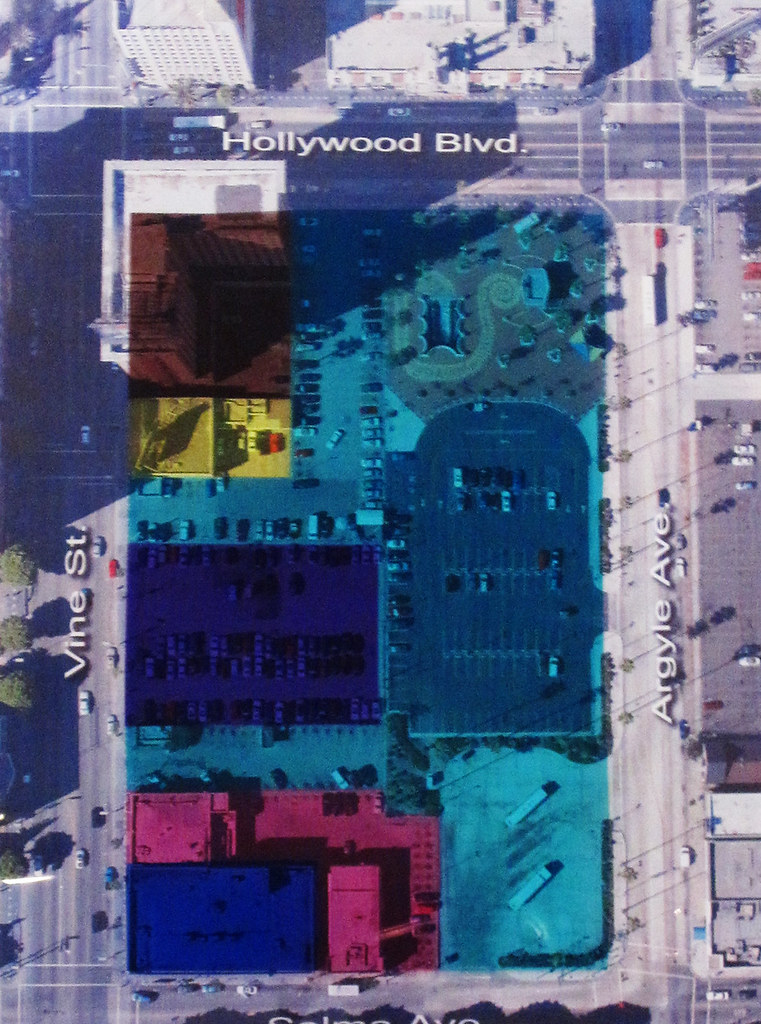
The parcel was originally split between six owners: Metro (light blue), Clark Trust (pink), HJT (dark blue), Shilling Trust (purple), KITRO (yellow) and the Taft Building (brown).

The parcel was originally split between six owners: Metro (light blue), Clark Trust (pink), HJT (dark blue), Shilling Trust (purple), KITRO (yellow) and the Taft Building (brown).

Architect and Planning Commissioner Bill Roschen said, “The complexity is unbelievable. The project is complex in policy, in design and in financing.”

Many of the challenges came from the joint development nature of the project which required the cooperation from disparate entities including the City of L.A., the Community Redevelopment Agency (CRA/LA), Metro, and the two development teams.

As Tim O’Brien, Senior Managing Director of Legacy Partners, put it, “This is probably the most monumental public/private partnership venture in the nation.”

The speakers emphasized that despite the complexities involved, the project simply would not have been possible without the joint participation of all the entities.

Also emphasized was the project’s role in the revival of Hollywood and, on a larger scale, the urban renewal of Los Angeles. Roschen noted that the world is changing – people want a return to urbansim – and this project represents that change. It’s mixed use, transit oriented and has an affordable housing component, all relatively new features to L.A. developments. But he also cautioned that it’s a change that L.A. is going to have to grow into.

In fact, this sentiment was echoed throughout the panel. Scott Morrison, V.P. of Operations at Legacy Partners, conceded that many of the residents at 1600 Vine – whose demographics tend toward the young and single – only discover the development’s proximity to Metro after they move in.

A view of the redesigned Red Line portal from a residential unit at the W.

A view of the redesigned Red Line portal from a residential unit at the W.

Livable Streets advocate Stephen Box was in attendance and expressed concern that, despite the overall positive vibe from the panel and attendees, the development does not live up to its transit oriented moniker. Box’s issues include a lack of good signage leading residents and guests to and from the Metro station, a lack of decent bicycle facilities and an overemphasis on parking and car culture in general. Case in point: in addition to the subway, the W Hotel also sits above two and a half levels of parking and offers a luxury branded car concierge to residents and guests.

Another guest in attendance, architect Stan Klemanowicz, noted that while the transit element may not be perfectly integrated, future development will create a transit destination out of Hollywood & Vine.

If destination and density are the most vital elements in transit oriented design then Klemanowicz may be right – Roschen noted that Hollywood is becoming a regional center where density is encouraged and the entire panel agreed that the Hollywood & Vine project is a landmark venture that will spur further redevelopment efforts in the area.

Here are some more photographs of the development:

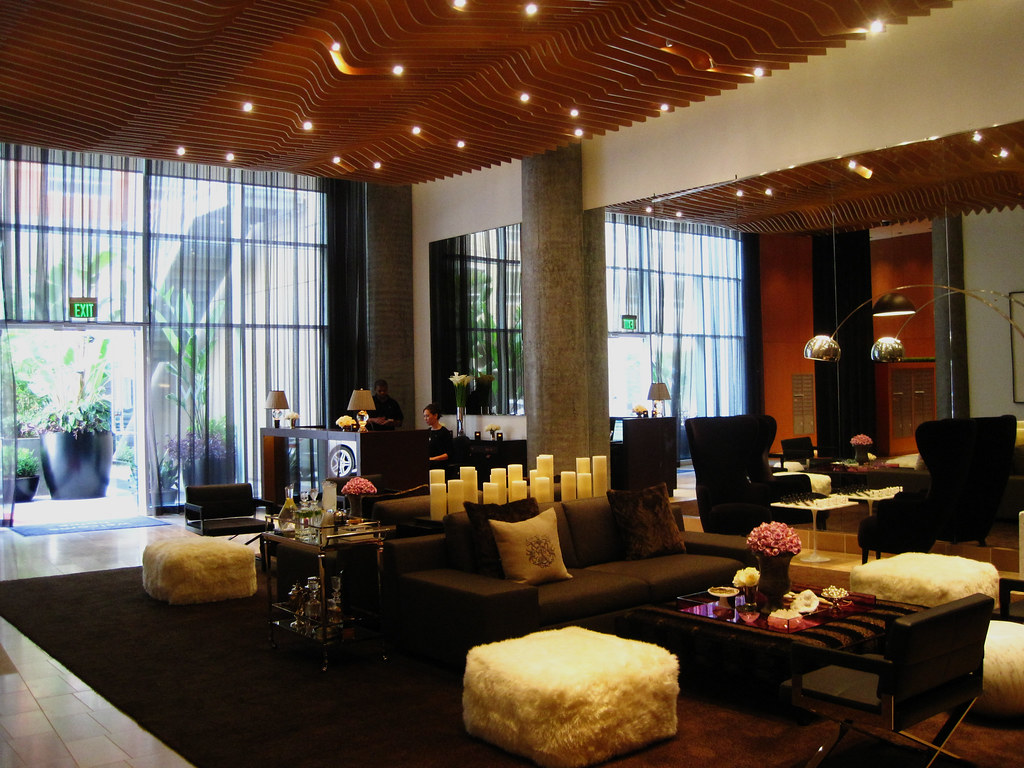
The residential lobby of the W.

The residential lobby of the W.

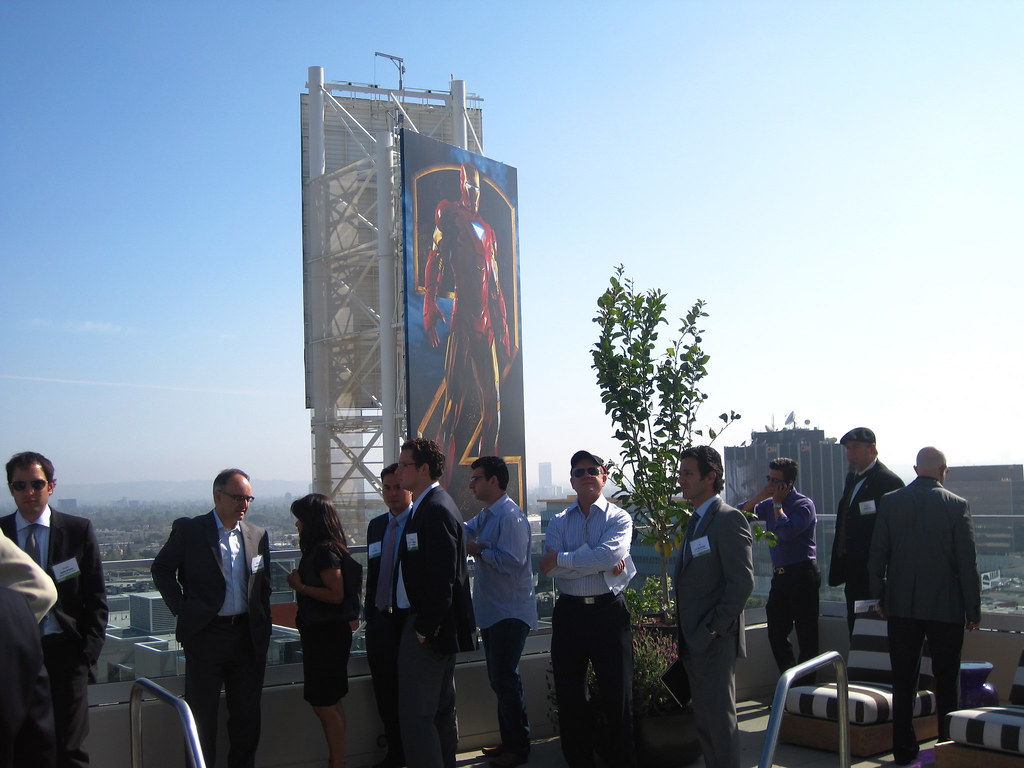
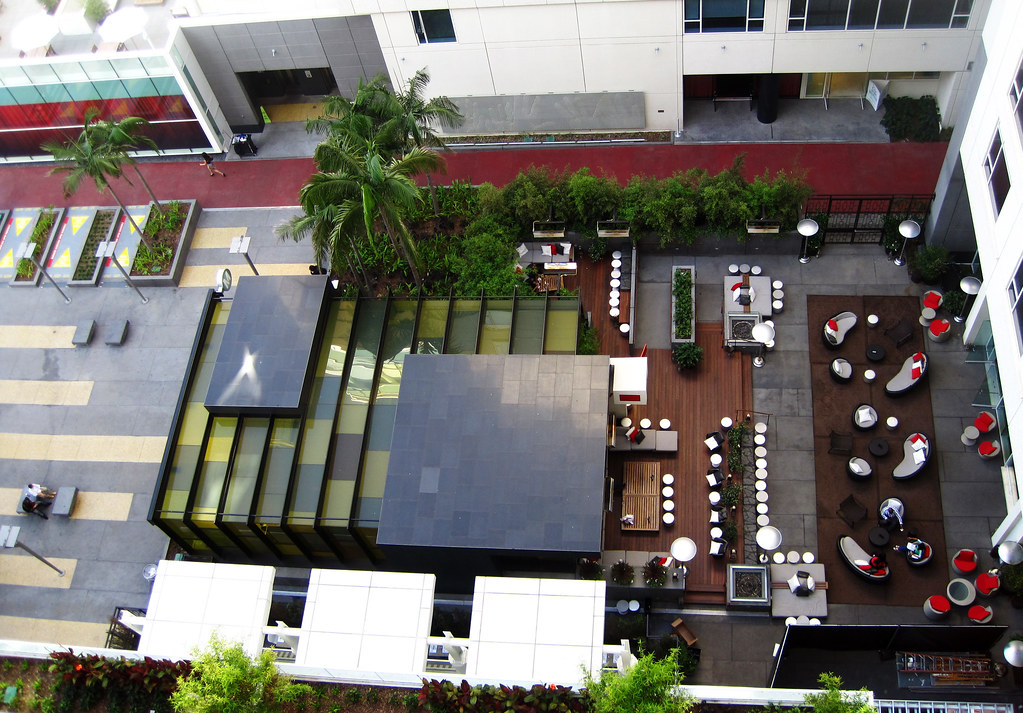
Guests on the rooftop of the W, dwarfed by an Iron Man 2 supergraphic advertisemnt.

Guests on the rooftop of the W, dwarfed by an Iron Man 2 supergraphic advertisemnt.

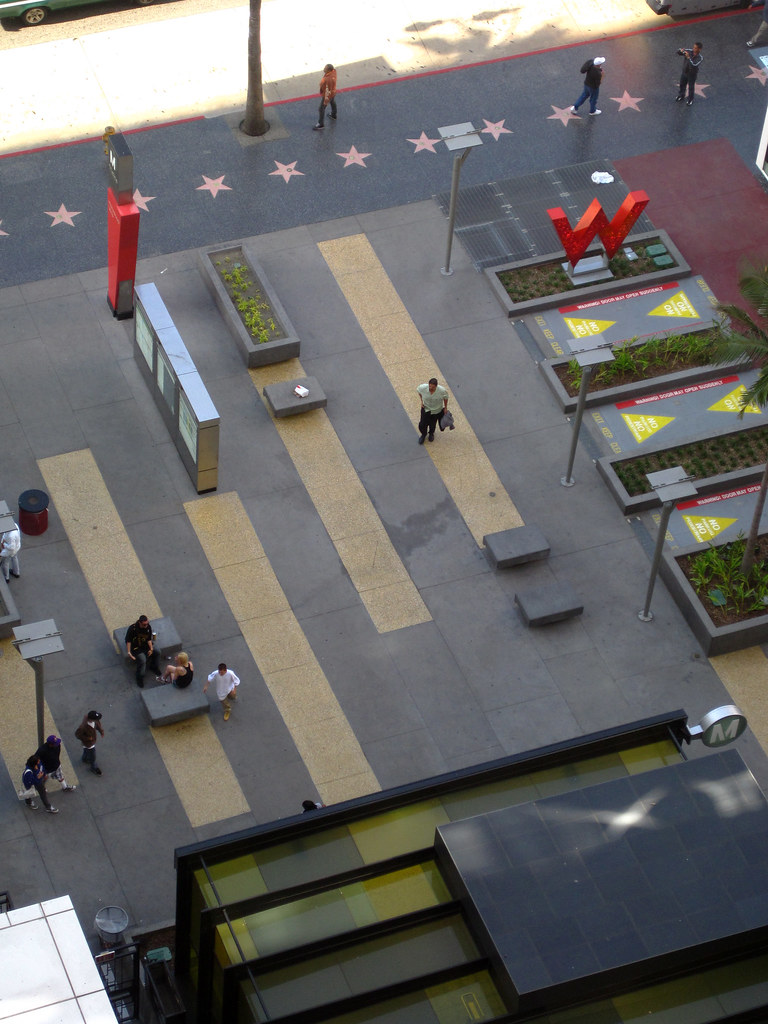
To the left: the Red Line portal and plaza. To the right: the W Hotel outdoor lounge.

To the left: the Red Line portal and plaza. To the right: the W Hotel outdoor lounge.

A studio apartment at 1600 Vine Apartments.

A studio apartment at 1600 Vine Apartments.

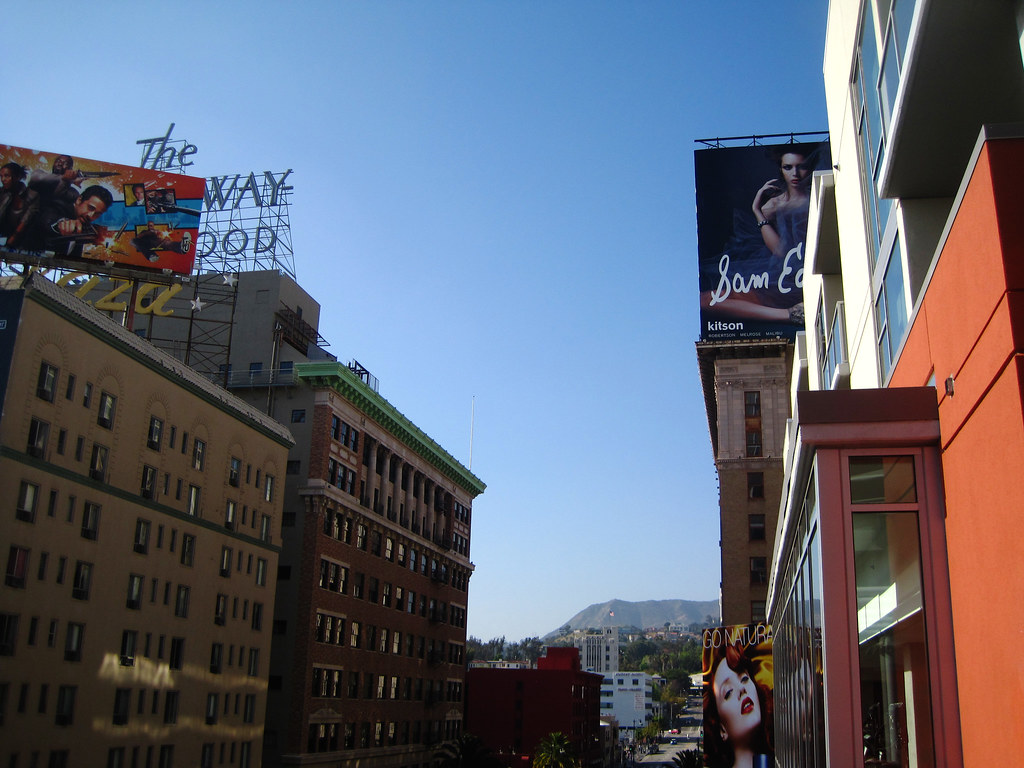
Looking down Vine Street from the 1600 Vine Apartments.

Looking down Vine Street from the 1600 Vine Apartments.

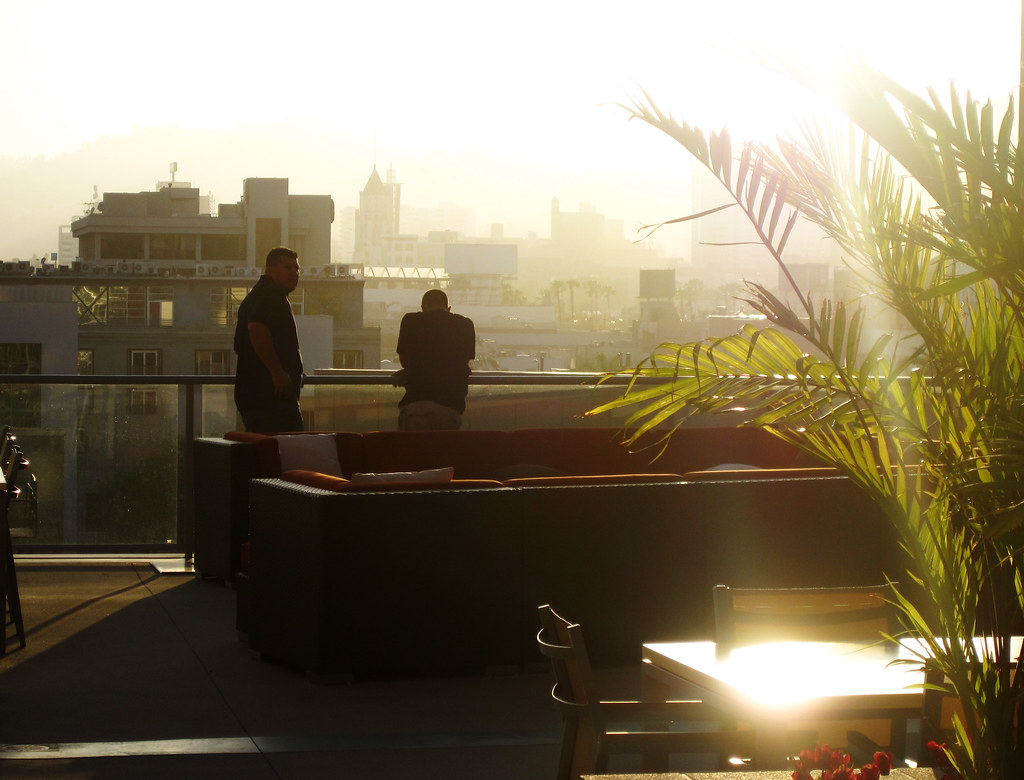
Sunset view from the 1600 Vine Apartments outdoor terrace.

Sunset view from the 1600 Vine Apartments outdoor terrace.

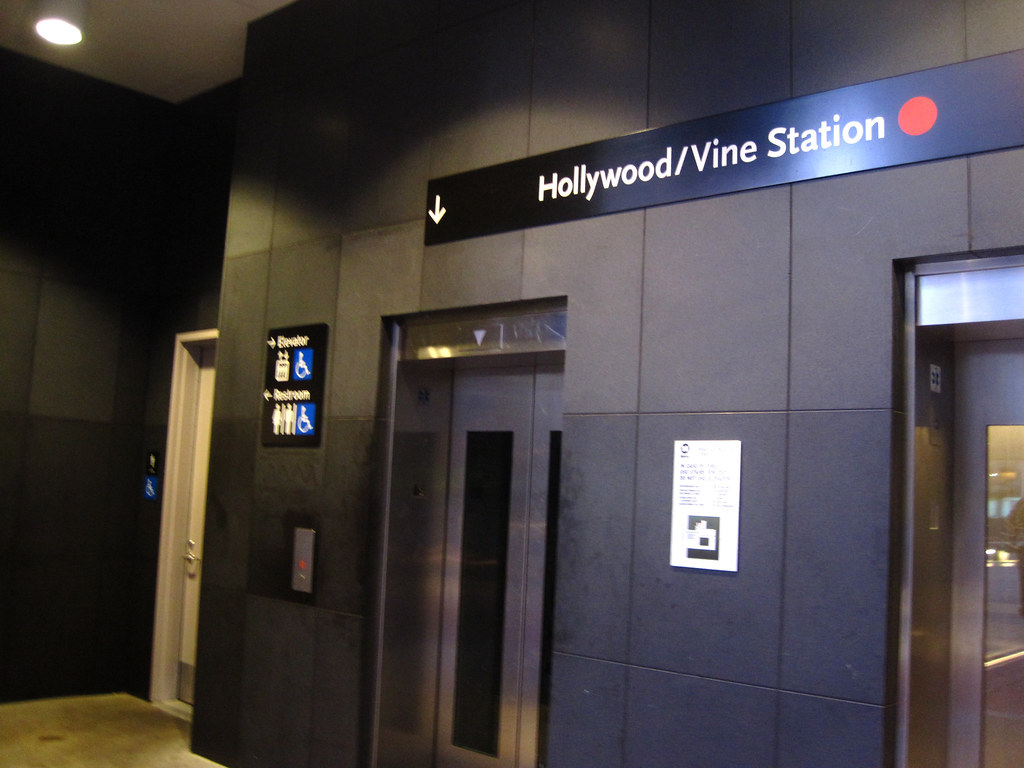
The redesigned Red Line plaza features, of all things, public restroom facilities.

The redesigned Red Line plaza features, of all things, public restroom facilities.

Bike facilities, on the other hand, are in short supply.

Bike facilities, on the other hand, are in short supply.

  • email
  •  
  • Twitter
  •  
  • Facebook
  •  
  • del.icio.us
  •  
  • Digg
  •  
  • Reddit
  •  
  • StumbleUpon
  •  
  • Yahoo! Buzz

Monday, May 17, 2010

Japan train firms take own paths for US billions (Source: Forbes.com)

Japan train firms take own paths for US billions - Forbes.com
Japan train firms take own paths for US billions

By JAY ALABASTER , 05.13.10, 06:56 AM EDT

TOKYO -- Japan's major train operators are taking different approaches as they pursue billions in high-speed train contracts in the U.S., reflected in their sales pitches to U.S. Transportation Secretary Ray LaHood during his recent visit.

Washington has awarded $8.5 billion to jump-start 13 regional high-speed rail projects, with $2.5 billion more to come this year and hundreds of billions needed before lines are up and running. The U.S. has almost no expertise of its own, and Japan sees a golden opportunity to export its technology and experience.

Japan boasts some of the most advanced trains in the world, running hundreds each day with average delays of less than minute, and a sterling safety record. Countries around the world are upgrading old lines to high-speed systems, but Tokyo has had little success at exporting its trains.

Now the major players here are taking different approaches in the U.S.

East Japan Railway Co., the country's largest train operator, is emphasizing systems that allow existing train lines and new high-speed lines to be used together, while Central Japan Railway Co. is pitching a complete system with cutting-edge technology. Japan's national railroad company was divided up by region and privatized in 1987.


On Wednesday, LaHood visited JR East's facilities in Tokyo, taking a short ride on a bullet train through a giant train washer, then stepping out onto a red carpet to a group of applauding employees at a depot. The company demonstrated its coupling technology that allows standard train cars to be used in a high-speed system.

Company executives plan to pursue business in California, where it appears that existing lines will be interspersed with high-speed tracks.

"Mr. LaHood talked about how the 'all-Japan' approach hasn't really worked until now, so we're going to try to be more proactive in sharing our expertise," said spokesman Koji Takano.

A day earlier, LaHood was given a ride on an advanced maglev that holds the world speed record for a passenger train. It is being designed by Japan's second-largest operator, Central Japan Railway, which runs the lucrative route between the country's two biggest cities, Tokyo and Osaka.

Magnetic levitation trains float along suspended by powerful magnets and can achieve greater speeds than traditional trains, but require completely new infrastructure to run. After decades of testing, the Japanese version has been approved by the government, but services aren't set to start until 2027.

JR Central plans to pitch the train for a Washington-Baltimore route, where U.S. planners are considering a completely new train system, according to company spokesman Katsumi Miyazawa.

There has been hopeful speculation in Japan that its close ties with Washington could provide an advantage against rivals like German conglomerate Siemens AG ( SI - news - people ) and Alstom SA of France, which have had far more success in selling abroad.

But LaHood, who traveled around Japan by bullet train during his stay, said that while he was impressed by Japan's technology and services, Tokyo will have to compete on an equal footing.

"Whether they be from Japan or Europe, they will have to come to America and make their case for the opportunities to partner," he said.

LaHood, who left for Hong Kong on Wednesday evening, repeatedly stressed that companies will have to team up with U.S. industry, work in the U.S., and hire U.S. workers. He said he met with his counterpart in Japan, Transport Minister Seiji Maehara, on Tuesday night and encouraged Japanese officials to come to the U.S., where individual regions will make the final call on what systems are employed.

"I have seen many innovative transportation opportunities and I am encouraging Japanese officials to come to America and see what opportunities there are to partner with Americans," he said.

Copyright 2010 The Associated Press. All rights reserved. This material may not be published, broadcast, rewritten or redistributed.

Friday, May 14, 2010

Park 101’s Freeway Lid for a Walkable Downtown Los Angeles (Source: Streetsblog Los Angeles)

Link: Streetsblog Los Angeles » Park 101’s Freeway Lid for a Walkable Downtown Los Angeles
Park 101’s Freeway Lid for a Walkable Downtown Los Angeles

by Joe Linton on May 11, 2010


In the 1950's, the 101 Freeway was built through downtown Los Angeles, cutting off the city's historic plaza, Union Station and Chinatown from the rest of the downtown civic center. This week, Angelenos have a chance to learn more about an ambitious plan that could restore much of the fabric of downtown, improve walking and bicycling connections, and add parkland to the L.A.'s park-poor core. It involves creating a lid above the below-grade freeway; atop the lid sits Park 101.

Interested folks can see Park 101 project plans, ask questions, and give input at a meeting preceding the monthly downtown Art Walk this Thursday. It takes place between 4 and 6 P.M. at Caltrans Headquarters, at 200 S. Main Street.

There are quite a few places where highway lids have been used to create park space. Successful examples include Memorial Park in La Canada and Freeway Park in Seattle. The lid idea is being explored for lots of locations in Southern California, including:

* Over the 101 Freeway from just west of Vermont Avenue to nearly Virgil Avenue - approved in the city's Station Neighborhood Area Plan
* Over the 5 Freeway near the Lincoln/Cypress Metro Gold Line Station - shown in Metro's and Livable Places' Making the Connections study.
* Hollywood Central Park over the 101 Freeway from just west of Hollywood Blvd to Santa Monica Blvd
* Over the 10 Freeway from 14th to 17th Street in Santa Monica

Park 101 is proposed over the 101 Freeway through downtown Los Angeles, extending from around Our Lady of the Angels Cathedral (near Grand Avenue) to the Los Angeles River (near Alameda Street.) The project would extend about one mile, entail roughly 100 acres, and cost about 800 million dollars. Project specifics and images are available at the Downtown News, LAist, Curbed, and at Caltrans' Park101 page.


There's a clear need to bridge the massive barriers that L.A.'s freeways present. This is especially true for downtown Los Angeles, given the density of population and availability of transit. Park 101's initial phase would strengthen walking connections to transit-hub Union Station, by lidding the block between Los Angeles Street and Main Street. Park 101 proponents propose that portions of the project can dovetail with High Speed Rail planned to connect with Union Station.

As civilized as Park 101 feels, the project does face a number of hurdles, not the least of which is its estimated $800M price tag. The site is surrounded by institutional and governmental uses that have turned their backs on the freeway. These government buildings, generally empty outside of weekday workdays, don't really generate the needed "eyes on the park" and park usage that can be critical for success. Additonally, even with the freeway covered, there are still numerous street crossings to bridge to arrive at a coherent park corridor. None of these issues are insurmountable, but they will take careful planning and plenty of funding.

Come check out the designs this Thursday!

Thursday, May 13, 2010

Important Data Recovery Sites

1) datatechlab.com
2) drivesavers.com
3) raidrecoverylab.com

Tuesday, November 17, 2009

El Monte Taking Transit Village Into Its Own Hands (Source: Curbed LA)

Link: Curbed LA: El Monte Taking Transit Village Into Its Own Hands
El Monte Taking Transit Village Into Its Own Hands

Monday, November 16, 2009, by Adrian Glick Kudler


[Rendering via Compass Blueprint Case Study]

A couple of felony charges can really derail a development, but the city of El Monte has made lemonade out of the arrests of two execs for the developer of their Transit Village mixed-use project. The city is taking the development back from the Titan Group and overseeing it themselves with their redevelopment agency, reports the San Gabriel Valley Tribune. (Two executives were originally arrested on forgery, fraud, embezzlement, grand theft, and burglary charges in June, but those have been withdrawn while the DA investigates a related incident that could yield more charges.) The city says they'll partner with a developer each for housing, office space, and retail.

About 60 acres are covered in the city's El Monte Transit Village Specific Plan, which they passed in September 2007. It allows for up to 1,850 residences, a theater and entertainment complex, a conference center, a hotel with about 200 rooms, about 491,000 square feet of retail, about 500,000 square feet of office space, 12 acres of parks, and river improvements. The centerpiece will be the bus depot--MTA will start a total renovation of the station early next year. Only problem? Financing, natch. The total price tag is about $1 billion. Deputy City Attorney Dave Gondek is optimistic, though. He told the Tribune, "We'll have families moving in within four to five years."

Wednesday, August 19, 2009

Demystifying Legalese in Contracts, Part I

Demystifying Legalese in Contracts, Part I - BusinessWeek
Demystifying Legalese in Contracts, Part I

Posted by: Nick Leiber on August 17

This is a post by guest blogger Jonathan I. Ezor.

jonathan_ezor.jpgOne of the complaints frequently leveled against attorneys is that they speak, and write, a language foreign to all other people: legalese. This tongue, filled with words and phrases like “heretofore,” “hereinafter,” “notwithstanding the foregoing,” “including but not limited to” and “except as otherwise provided herein,” is most commonly seen in contracts, and seems to be best expressed in

very tiny letters.

The phenomenon causes most businesspeople, and even many other lawyers, to give up before ever trying to understand what the contract says.

This is extremely unfortunate and wrong, since a "contract" is also an "agreement," which means that the parties who are actually bound by it are supposed to agree to its terms, which really requires understanding them. The best contracts lawyers are actually good writers, able to turn a variety of business points into a single, comprehensible and consistent document. While there are some words that have specific legal meaning and need to be included in a contract ("warranty," for example, rather than simply "promise"), the rest of the language should be understandable to everyone involved. If the client can't read a contract and figure out what it means, it's a bad contract. Worse still, vague language will more likely lead to a lawsuit than do clear provisions, since misunderstanding is a frequent driver of disputes.

While all attorneys should strive to be better, clearer writers, there are other things that also can help make legalese more understandable to businesspeople. The next few articles in this blog series will be dedicated to demystifying typical contract provisions, using a Web development agreement (a frequent source of misunderstanding and conflict) as a model.

From warranties and representations to indemnification to the specifications to termination and beyond, the goal is to help turn the contracts readers get (and give) in business from gobbledegook into guideposts.

For starters, consider a provision often buried in the "Miscellaneous" (which many translate as "skim or even ignore this") section of a contract: the choice of law and forum clause. It usually looks like this:

This contract and any disputes hereunder shall be governed by the laws of the State of New York, excluding any principles of conflicts of laws. The exclusive forum for any disputes hereunder shall be the state and federal courts in the City of New York, State of New York.

There are two important pieces here. The first tells you which laws will be used to explain and interpret the contract, in this case New York's. The "excluding any principles of conflicts of laws" part avoids the logic puzzle caused by looking at New York law about what law applies to a contract: "New York law is supposed to apply, but New York law says that this contract should be governed by Texas law because the two parties are in Texas, but the contract says that New York law is supposed to apply, but..." Most states' laws are fairly similar, but you should still ask your lawyer if one or another has some unforeseen landmines (often regarding consumer or employee protection) that makes the choice troublesome.

The second piece, though, is almost purely strategic: where do disputes get heard? The short answer is often, "in the city where the more powerful party is located." Why? So that, if the parties are in different locations, the one with the power will find it much easier to bring a lawsuit than will the other. Consider if Fredco is in New York and Murrayco is in Los Angeles, and they sign a contract with the New York forum language. If Fredco cheats Murrayco, Murrayco will have to find a New York lawyer, travel to and stay in New York, and lose the services of any Murrayco employees in New York if it wants to sue Fredco. By contrast, Fredco's general counsel can hop on the nearest subway down to the courthouse and sue Fredco, forcing it to come East to defend itself. A New York forum is clearly better for Fredco than Murrayco.

What can Murrayco (or your company) do when faced with a far-away forum demanded by the other side to a deal? One productive approach is to propose the following alternative:

The exclusive forum for any disputes hereunder shall be the state and federal courts nearest the party against whom the dispute is brought.

In other words, if Fredco wants to sue Murrayco, it has to go to Los Angeles.

For Murrayco to sue Fredco, it must come to New York. Equal disincentives to sue, equal encouragement to settle, and it's very difficult for Fredco's lawyer to reasonably object to the suggestion.

The next blog will demystify one of the most important, and least clear, portions of most business contracts: the warranty provision. If you have suggestions for provisions you would like demystified, please feel free to e-mail your ideas.

Jonathan I. Ezor is the director of the Touro Law Center Institute for Business, Law and Technology, and an assistant professor of law and technology. He also serves as special counsel to The Lustigman Firm, a marketing and advertising law firm based in Manhattan. A technology attorney for more than 15 years, Ezor has represented advertising agencies, software developers, banks, retailers, and Internet service providers, and has been in-house counsel to an online retailer, an Internet-based document printing firm, and a multinational Web and software development company.


Monday, July 13, 2009

Duarte MTA open house, tours of light rail yards (Source: SGVTribune.com)

Link: Duarte MTA open house, tours of light rail yards - SGVTribune.com
Duarte MTA open house, tours of light rail yards
Staff Reports
Posted: 07/12/2009 04:24:44 PM PDT

In response to requests of Duarte City Council members and city residents, the Los Angeles County Metropolitan Transportation Authority (Metro) has scheduled three tours and a community open house.

The open house will be held from 6 to 8 p.m. Aug. 6, at the Duarte Community Center, 1600 Huntington Dr. The tours are scheduled for 9 a.m. to 1 p.m. July 18, July 22, and Aug. 4 at the community center.

These tours will provide an opportunity to see all three of Metro's operating light rail maintenance yards.

A new rail maintenance facility is needed to complete and operate the Foothill Extension.

Included in the tours are the light rail maintenance yards for Metro's Blue, Green and Gold Lines in Long Beach, Lawndale and Los Angeles. Tours will begin at the Sierra Madre Villa Gold Line station.

For reservations, call Dave Monks at (213) 922-7456.

To submit information for briefs, e-mail news.tribune@sgvn.com


Who's Next on Google Transit? A Sampling (Source: LAist)

Who's Next on Google Transit? A Sampling

Yesterday was a big day for Los Angeles transportation. Metro, the county's behemoth transit agency, officially announced their partnership with Google. But the county is large and there are various partner agencies throughout. Here's a sampling, with more to come in later days, of where other city transit systems stand with Google Transit:

Los Angeles (LADOT): "Basically, our information, all of it, whether it's DASH or Commuter Express, will be included in whatever Metro provides [to Google]," said Laura Keller of the department's Public Information Office. However, Metro was a bit bemused upon hearing this and could not confirm this fact immediately. UPDATE: Metro is looking into the possibility, but Google wants to pursue individual agreements with every municipal operator.

Culver City: "Culver City is interested in the program," says Art Ida, who manages the city's transit division. "However, we do not have an expected implementation date."

Santa Clarita: The city's Webmaster, Ryan Drake, explains it from a technical side: "It is something we have looked into in the past but due to the way our routes are set up we are not able to provide them with the data they require. However, once we have fully implemented our new Transit Information Network (TIN) we plan on revisiting the application." When Google Transit was gearing up to launch a few years ago, the city had applied to be part of the beta test, but their application did not make it through.

Santa Monica (Big Blue Bus): Yes, hopefully by the end of the calendar year, they said in a comment left on Green LA Girl.

Who else locally is already on Google Transit? Burbank, Irvin, Orange County, Riverside, San Bernadino County, Foothill Transit, Metrolink and Thousand Oaks.

By Zach Behrens in News on July 10, 2009 10:15 AM


Downtown Streetcar Project Opens Website, Seeks Feedback (Source: Streetblog Los Angeles)

Link: Streetsblog Los Angeles » Downtown Streetcar Project Opens Website, Seeks Feedback
Downtown Streetcar Project Opens Website, Seeks Feedback

by Damien Newton on July 10, 2009


A street car on Tornoto's King Street. Photo: Kevinseanw/Flickr

Activist and blogger Eric Richardson, and indeed the whole Blogdowntown team so some extent, have been heavily involved in advocating for bringing streetcars back to Los Angeles on Broadway and beyond. Thus, it's little surprise that Richardson has the scoop on L.A. Streetcar Inc.'s new website designed to solicit feedback on potential routes for Los Angeles' streetcars of the 21st Century:

For many Downtowners, 2014 just can't get here fast enough.

That's the projected opening date for a Downtown streetcar planned to link South Park, Bunker Hill and the Historic Core. L.A. Streetcar Inc. (LASI) today launched a new website full of information about the project and its current status.

Most importantly, the site includes maps for three conceptual alignments currently under consideration.

The non-profit LASI was set up in 2008 to spearhead the streetcar project, following a model established in other cities like Portland. In January, the board named Dennis Allen its Executive Director and he's been hard at work on streetcar issues ever since.

What follows is an interview with Allen that touches on the choices behind the roots and other issues. If you're not familar with Blogdowntown and have some thoughts on the streetcar, please feel free to leave comments there as well as here. The folks at L.A.S.I. are familar with Blogdowntown and will be mining the site for feedback.